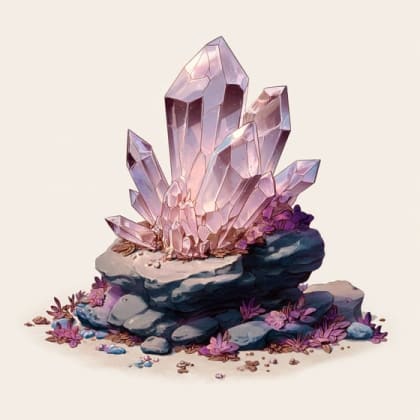




Bauxite
Bauxite is a rock that is the main source of aluminum. It is usually reddish-brown and has a rough texture.
The Bauxite is typically a dull, earthy rock, often appearing reddish-brown, yellowish-gray, or even white. It has a distinctive lumpy or pisolitic texture, making it look like it's made of small, rounded pellets rather than shiny crystals.
Category
MineralRarity
Common
Danger
1/5 · Very low
Snaps
Be the first to snap!
Bauxite was once considered rarer than gold because extracting its aluminum was so tricky!
Even though it's a soft rock, Bauxite helps make super-strong car parts and building materials!
The reddish color often seen in Bauxite comes from small bits of iron minerals mixed inside!
This humble rock contains enough aluminum to help build an entire airplane!
Bauxite has a high concentration of aluminum minerals that makes it the primary source for creating strong, lightweight aluminum metal.
Bauxite has a very high melting point, making it useful for creating materials that can withstand extreme heat in furnaces.
Bauxite's mineral components give it a useful hardness for manufacturing grinding wheels and other abrasive tools.
Sedimentary rocks are formed from the accumulation and compaction of sediments, organic matter, or chemical precipitates.
Metallic refers to substances, materials, or objects possessing properties characteristic of metals, such as luster and conductivity.
Crystalline describes a mineral or rock composed of crystals, often exhibiting a regular atomic structure and geometric external form.
Natural refers to organisms, materials, or phenomena existing or produced by nature, not artificially created.
No aliases listed yet.
Danger
1/5 · Very low
Handle gently and avoid sharp edges. Ask an adult before picking anything up.
The easiest way to identify Bauxite is to use the Snappit nature identifier app.
white, gray, yellow, red, brown
2.5
dull
2.3
Zoom in to split clusters and explore where this object has been snapped.
Recent snaps will appear here as new observations are added.
Take the discovery with you
Snap it with Snappit to identify it, learn what makes it special, and add the discovery to your collection.