




Chamois
Rupicapra rupicapra
Chamois are agile mountain goats with short, hooked horns. They live in high rocky places and are excellent climbers, leaping from rock to rock with ease.
Habitat: Mountain regions
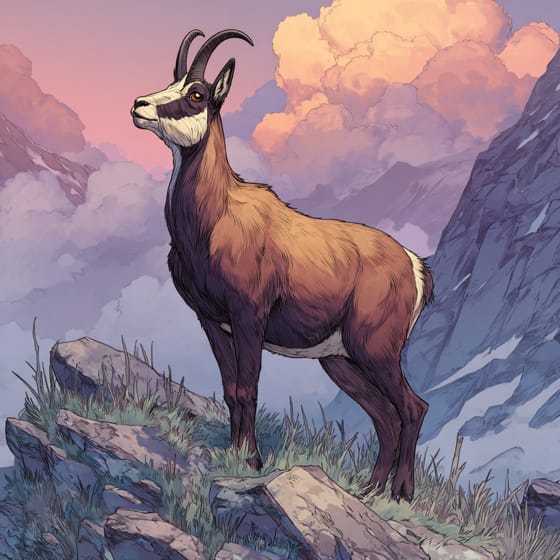
The Chamois has a slender body with short, hooked black horns on both males and females. Its fur is reddish-brown in summer, turning dark brown to black in winter, with a distinctive white face and a dark stripe through its eyes. This coloration helps it blend into rocky, snowy mountain environments.
Category
MammalsRarity
Common
Danger
2/5 · Low
Snaps
Be the first to snap!
Baby Chamois are called 'kids' and can climb rocks just hours after birth!
Both male and female Chamois grow short, backward-curving horns!
Chamois use loud whistles to warn their herd about danger!
These amazing animals can navigate incredibly steep, icy mountain cliffs!
Chamois has specialized hooves with a hard outer rim and soft inner pad that help them grip steep, icy rocks.
Chamois can jump incredible distances across rocky gaps because of their powerful legs, helping them escape predators.
Chamois can change its fur color from reddish-brown to dark brown in winter, helping them blend into snowy peaks.
Chamois munch on mountain plants like grasses, herbs, and leaves all year round!
Canis lupus
Wolves are a primary predator of Chamois.
Lynx lynx
Lynx hunt Chamois, especially the young or weak.

Aquila chrysaetos
Golden Eagles prey on Chamois kids.
Pinus mugo
Chamois browse on pine needles and seek shelter.
Wildlife encompasses all undomesticated animal and plant life existing in their natural habitats.
Furry describes animals possessing a dense covering of soft hair or fur.
Characterized by having one or more hard, permanent, pointed projections on the head.
Camouflaged describes organisms that possess coloring or patterns that allow them to blend into their environment.

This trait characterizes organisms whose diet consists entirely or primarily of plant material.

This habitat trait identifies species found in mountainous regions, characterized by high elevation, steep slopes, and varying climate zones.

Diurnal animals are primarily active during daylight hours, typically resting or sleeping at night.
Danger
2/5 · Low
Admire chamois from a safe distance and never try to approach or feed them.
The easiest way to identify Chamois is to use the Snappit nature identifier app.
107-137 cm
15-60 kg
15-22 years
50 km/h
Chamois munch on mountain plants like grasses, herbs, and leaves all year round!
Mountain regions
Grazing
Zoom in to split clusters and explore where this object has been snapped.
Recent snaps will appear here as new observations are added.
Take the discovery with you
Snap it with Snappit to identify it, learn what makes it special, and add the discovery to your collection.




.jpg&width=800)

.JPG&width=800)


.jpg&width=800)
