



Giant Ground Sloth
Megatherium americanum
Giant Ground Sloth was a large Ice Age mammal that lived alongside early humans and other megafauna.
Habitat: Ice Age grasslands and tundra
The Giant Ground Sloth has a massive, robust body covered in thick, shaggy fur, often reddish-brown or grey. It possesses an unusually small head for its size and incredibly long, powerful claws on its front feet, making it look distinctively powerful and shaggy.
Category
AncientRarity
Common
Danger
1/5 · Very low
Snaps
Be the first to snap!
Wow, it could stand taller than a giraffe!
Wow, it walked on the sides of its feet!
Wow, it was as heavy as an elephant!
Wow, its claws were the size of human hands!
Giant Ground Sloth can reach high branches because of its ability to stand on two legs, helping it access leafy food.
Giant Ground Sloth has enormous, hook-like claws that help them dig for tough roots and tubers in the ground.
Giant Ground Sloth can pull down tree branches using its immense strength, allowing it to browse vegetation easily.
Giant Ground Sloth has a very thick, muscular tail that helps them balance while standing upright to feed.
This massive, shaggy giant was a plant-eater, munching on leaves, twigs, and roots.
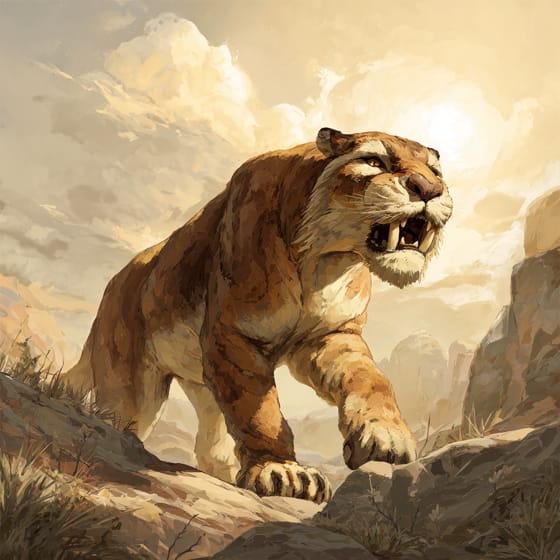
Smilodon populator
May have hunted young sloths.
Acacia caven
Stripped leaves and branches from thorny trees.
Prosopis flexuosa
Foraged on the leaves and pods of woody shrubs.
Doedicurus clavicaudatus
Shared ancient grazing grounds.
Furry describes animals possessing a dense covering of soft hair or fur.
Ancient refers to organisms, objects, or geological formations that have existed for an extremely long period.
An artifact is an object made or modified by human culture, typically of historical or archaeological interest.
A fossil is the preserved remains or traces of an ancient organism embedded in rock or other geological deposits.

Giant describes organisms or objects of significantly larger size than average for their species or type.
Danger
1/5 · Very low
While extremely dangerous in their time, this creature is now extinct.
The easiest way to identify Giant Ground Sloth is to use the Snappit nature identifier app.
5.5-6.5 m
3000-4000 kg
This massive, shaggy giant was a plant-eater, munching on leaves, twigs, and roots.
Ice Age grasslands and tundra
Foraging
Pleistocene
0.01
Zoom in to split clusters and explore where this object has been snapped.
Recent snaps will appear here as new observations are added.
Take the discovery with you
Snap it with Snappit to identify it, learn what makes it special, and add the discovery to your collection.