

Alpine Toadflax
linaria alpina
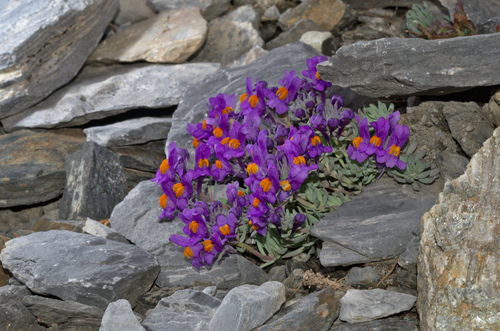
Alpine Toadflax (Linaria alpina) is a resilient, low-growing perennial plant that brings a splash of vivid color to the stark, rocky landscapes of Europe's high-altitude mountain ranges. Thriving in inhospitable alpine screes and moraines, this tough little survivor has adapted beautifully to intense sunlight, freezing temperatures, and shifting gravel. It belongs to the plantain family (Plantaginaceae) and is celebrated by hikers and botanists alike for its brilliant contrasting flowers, which act as beacons of life amidst gray rock fields. Its ability to colonize unstable slopes makes it an important pioneer species, helping to stabilize gravelly soils so other alpine plants can eventually take root.
生息地: Found on unstable alpine screes, rocky slopes, gravelly moraines, and high-altitude riverbeds.
This plant is easily identified by its low, creeping, and sprawling habit, typically reaching heights of 5 to 20 cm. It features fleshy, narrow, blue-green (glaucous) leaves arranged in whorls along the stems. The most striking feature is the clusters of snapdragon-like flowers, which are deep violet or purple with a contrasting, fiery-orange bulge on the lower lip that serves as a nectar guide. Each flower also possesses a long, pointed spur at the back. Some rare varieties may lack the orange center, showing pure violet flowers.
カテゴリ
植物レア度
Common
危険度
1/5 · 非常に低い
スナップ
最初にスナップしよう!
Despite growing in extremely nutrient-poor gravel, it can produce a stunning display of blooms that carpet entire scree slopes.
Its seeds are lightweight and winged, allowing the mountain winds to carry them uphill to colonize new landslide areas.
The genus name Linaria comes from the Latin word for flax, referring to the similarity of the leaves of some species to those of common flax.
Possesses highly flexible, sprawling stems and deep, anchoring roots that allow it to survive and grow through shifting, unstable gravel slides.
Features vibrant orange palate zones on its violet petals that act as precise landing guides for pollinators navigating harsh alpine winds.
Accumulates soluble sugars and specialized proteins in its cells to prevent ice crystal damage during sudden high-altitude frosts.
As a photosynthetic plant, the Alpine Toadflax produces its own food using sunlight, carbon dioxide, and water, supplemented by key minerals absorbed through its roots from sparse alpine soils.
Bombus alpinus
Pollinated primarily by alpine bumblebees capable of forcing open the snapdragon-like petals.
Rupicapra rupicapra
Occasionally grazed upon by high-altitude herbivores navigating the rocky slopes.
このオブジェクトにはまだ特徴バッジが割り当てられていません。
まだ別名はありません。
テーマが追加されると、このオブジェクトのコレクションがここに表示されます。
危険度
1/5 · 非常に低い
まだ特別な安全上の注意はありません。
Alpine Toadflaxを識別する最も簡単な方法は、Snappit自然識別アプリを使用することです。
5-20 cm
2-5 年
As a photosynthetic plant, the Alpine Toadflax produces its own food using sunlight, carbon dioxide, and water, supplemented by key minerals absorbed through its roots from sparse alpine soils.
Found on unstable alpine screes, rocky slopes, gravelly moraines, and high-altitude riverbeds.
ズームインしてクラスターを分割し、このオブジェクトが撮影された場所を探索しましょう。
新しい観察が追加されると、ここに最近のスナップが表示されます。