

Barberry Family
berberidaceae
The Barberry Family, scientifically known as Berberidaceae, is a fascinating and diverse group of flowering plants ranging from delicate woodland herbs to hardy, spiny shrubs. Renowned for their ornamental beauty, ecological resilience, and rich chemical complexity, these plants have carved out a unique niche in temperate ecosystems worldwide. Many members of this family are famous for producing vibrant yellow flowers, colorful berries, and highly armed branches that protect them from foraging animals. Beyond their aesthetics, the Barberry Family is deeply intertwined with human history and medicine. They produce a wealth of powerful alkaloids, most notably berberine, which gives their inner wood a striking yellow hue and has been utilized in traditional herbal medicine for centuries. From the forest-dwelling Mayapple to the rugged garden barberries, this botanical family showcases incredible evolutionary adaptations that make them a delight for nature enthusiasts to discover.
生息地: Often found in temperate woodlands, scrubby hillsides, forest edges, and cultivated gardens across the Northern Hemisphere.
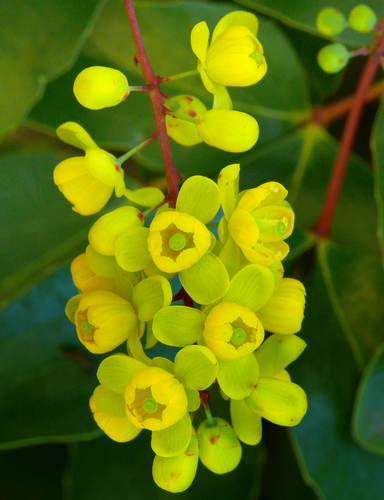
Members of this family are easily recognized by their wood, which reveals a bright, neon-yellow color when the bark is scraped. They typically feature simple or pinnately compound leaves that may have spiny margins, and their stems often sport sharp, modified thorns. The flowers are small, usually yellow or white, with parts arranged in multiples of three, and they mature into attractive clusters of red, blue, or black berries.
カテゴリ
植物レア度
Common
危険度
1/5 · 非常に低い
スナップ
最初にスナップしよう!
Due to their role as a host for wheat rust, early American colonists enacted some of the first agricultural quarantine laws to eradicate barberries.
If you gently poke the base of a blooming barberry flower's stamen, it will instantly spring inward in a fraction of a second to deposit pollen.
Mayapples, a herbaceous member of this family, produce a compound called podophyllotoxin, which serves as a precursor for modern chemotherapy medications.
The inner bark and roots of barberry plants contain a powerful yellow alkaloid called berberine, which was historically used as a natural fabric dye.
The flowers feature specialized stamens that snap inward when touched by an insect's tongue, efficiently dusting the pollinator with pollen.
They synthesize berberine and other toxic alkaloids that give them a bitter taste, effectively deterring herbivorous insects and mammals.
Many shrubby species possess leaves or shoots modified into sharp, formidable spines that prevent large browsers from feeding on their foliage.
As photosynthetic plants, members of the Barberry Family manufacture their own food using sunlight, carbon dioxide, water, and essential nutrients absorbed from the soil.
Puccinia graminis
Serves as an alternate host for the destructive agricultural rust fungus.
Turdus migratorius
Consumes the bright berries during fall migration, helping to disperse seeds.
Bombus bimaculatus
Visits the yellow flowers for nectar and triggers the pollen-releasing stamens.
このオブジェクトにはまだ特徴バッジが割り当てられていません。
テーマが追加されると、このオブジェクトのコレクションがここに表示されます。
危険度
1/5 · 非常に低い
まだ特別な安全上の注意はありません。
Barberry Familyを識別する最も簡単な方法は、Snappit自然識別アプリを使用することです。
As photosynthetic plants, members of the Barberry Family manufacture their own food using sunlight, carbon dioxide, water, and essential nutrients absorbed from the soil.
Often found in temperate woodlands, scrubby hillsides, forest edges, and cultivated gardens across the Northern Hemisphere.
ズームインしてクラスターを分割し、このオブジェクトが撮影された場所を探索しましょう。
新しい観察が追加されると、ここに最近のスナップが表示されます。