






Bitterroot
Lewisia rediviva
Bitterroot is a pretty flower that grows in the mountains. It has pink or white petals and is known for its special roots that can be eaten. It blooms in spring and loves sunny places!
生息地: Mountain regions
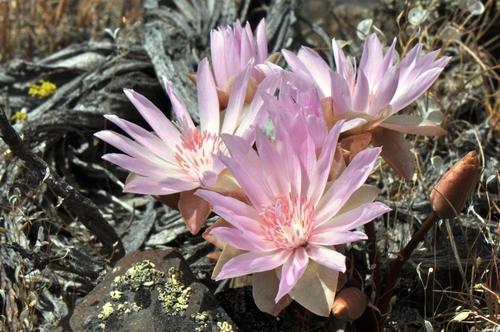
The Bitterroot has striking rose-pink to white flowers, often with darker stripes, that emerge directly from a low rosette of narrow, fleshy leaves. Its bright petals stand out vividly against dry, rocky ground, making it easily spotted.
カテゴリ
植物レア度
Common
危険度
1/5 · 非常に低い
スナップ
最初にスナップしよう!
It's the state flower of Montana, a symbol of its rugged mountain beauty!
Its name comes from roots that taste bitter unless prepared correctly!
Its nutritious roots were a vital food source, even traded like currency!
This tough plant can bloom again even after its leaves have completely withered!
Bitterroot can survive long droughts because its fleshy taproot stores vital water and nutrients deep underground.
Bitterroot has an amazing ability to "play dead," shriveling up and appearing lifeless, only to burst into bloom again later!
Bitterroot can go dormant during dry periods, shedding its leaves to conserve moisture until conditions improve.
Bombus bifarius
Collects pollen and nectar from its vibrant flowers.
Apis mellifera
Visits flowers, aiding in its reproduction.
Peromyscus maniculatus
May nibble on its leaves or flower parts.

Thomomys talpoides
Digs for and consumes its fleshy roots.
開花植物とは、繁殖サイクルの一部として花を咲かせるすべての植物のことです。
春咲きの植物は春の季節に花を咲かせ、冬の終わりと新たな成長の始まりを告げます。
薬用植物は、病気の治療や健康維持などの治療目的に利用できる成分を含んでいます。
香りのよい花は心地よい香りを放ち、主に花粉媒介者を惹きつけたり、外敵から身を守るために使われます。

カラフルとは、生物や物体が明るくはっきりとした多様な色合いを見せることを指します。

食用植物とは、人間が安全に消費できるとされている植物の部位を指します。

この生息環境は、高い標高、急な斜面、多様な気候帯を特徴とする山岳地帯で見られる種を示します。
まだ別名はありません。
危険度
1/5 · 非常に低い
Always look but don't touch wild plants unless a grown-up says it's okay.
1-5 cm
2-10 cm
2-5 cm
Spring_to_early_summer
はい
なし
多年生
昆虫
ズームインしてクラスターを分割し、このオブジェクトが撮影された場所を探索しましょう。
新しい観察が追加されると、ここに最近のスナップが表示されます。




_001.jpg&width=800)











_Ligustrum_sinense_-_Foliage_and_infructescence.jpg&width=800)

