

Canary Laurel
laurus novocanariensis
The Canary Laurel (Laurus novocanariensis) is a defining evergreen tree of the ancient Macaronesian laurel forests, also known as laurisilva. Native to the Canary Islands, Madeira, and parts of Morocco, this resilient tree plays a key ecological role in capturing moisture from atmospheric mist, sustaining the surrounding humid ecosystem. It features aromatic leaves, small greenish-yellow flowers, and dark olive-like berries that provide critical nourishment for endemic bird species. Historically, these lush forests covered much of the Mediterranean basin, making the Canary Laurel a living relic of a bygone geological era. Its dense canopy creates a sheltered microclimate that supports a diverse understory of ferns, mosses, and unique invertebrates.
生息地: Found in humid, subtropical cloud forests (laurisilva) of Macaronesia, typically on windward slopes where fog condensation is frequent.
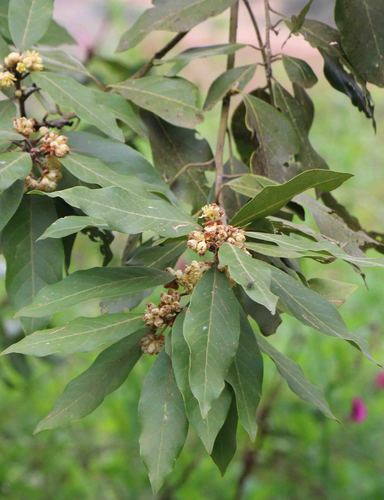
The Canary Laurel is a medium-sized evergreen tree that typically grows between 10 and 20 meters tall, often developing multiple trunks from its base. It features smooth, pale grey bark that becomes darker and rougher with age. Its leathery, lance-shaped leaves are a deep, glossy green on top and paler underneath, releasing a characteristic spicy aroma when crushed. Small, star-shaped, pale yellow-green flowers bloom in clusters during late winter and spring. These are followed by fleshy, egg-shaped green berries (drupes) that ripen to a shiny black, resembling miniature olives.
カテゴリ
植物レア度
Common
危険度
1/5 · 非常に低い
スナップ
最初にスナップしよう!
Its berries are a vital food source for two rare, endemic Macaronesian pigeons, making the tree's health crucial for the survival of these birds.
The Canary Laurel is a living fossil, representing a lineage of trees that dominated the Mediterranean basin millions of years ago before the ice ages.
When crushed, the leaves emit a rich, sweet, and spicy aroma due to their high content of aromatic essential oils, though they are distinct from culinary bay leaves.
The tree's dense canopy and leaf structure efficiently capture atmospheric moisture from passing fog, dripping it down to water its own root system.
It can vigorously regenerate by producing new shoots from the base of its trunk, allowing it to recover quickly from physical damage or canopy loss.
Its leaves contain high concentrations of essential oils and secondary metabolites that deter herbivores and inhibit the growth of competing understory plants.
As a photoautotrophic plant, the Canary Laurel produces its own organic compounds using sunlight, water, carbon dioxide, and essential nutrients absorbed from the soil.
Columba bollii
Feeds on the fleshy drupes of the Canary Laurel, acting as one of its primary seed dispersers.
Columba junoniae
An endemic pigeon that relies heavily on the laurel berries for sustenance and assists in seed distribution.
Laurobasidium lauri
A specialized parasitic fungus that infects the tree, causing large, woody galls to develop on the trunk and branches.
このオブジェクトにはまだ特徴バッジが割り当てられていません。
まだ別名はありません。
テーマが追加されると、このオブジェクトのコレクションがここに表示されます。
危険度
1/5 · 非常に低い
まだ特別な安全上の注意はありません。
Canary Laurelを識別する最も簡単な方法は、Snappit自然識別アプリを使用することです。
1000-2000 cm
100-300 年
As a photoautotrophic plant, the Canary Laurel produces its own organic compounds using sunlight, water, carbon dioxide, and essential nutrients absorbed from the soil.
Found in humid, subtropical cloud forests (laurisilva) of Macaronesia, typically on windward slopes where fog condensation is frequent.
ズームインしてクラスターを分割し、このオブジェクトが撮影された場所を探索しましょう。
新しい観察が追加されると、ここに最近のスナップが表示されます。