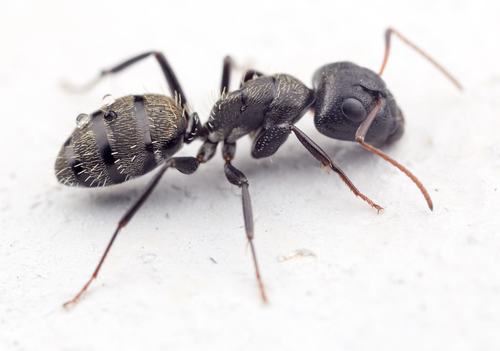


Carpenter Ants, Typical Sugar Ants And Allies
camponotus
Camponotus is a massive, ecologically vital, and globally widespread genus of ants, famous for its carpenter ants and sugar ants. Unlike termites, carpenter ants do not eat wood; instead, they hollow out dead, damp timber to create elaborate, smooth-walled galleries for their colonies. This behavior makes them significant decomposers in forest ecosystems, accelerating the breakdown of fallen logs and returning nutrients to the soil. Beyond their woodworking skills, these fascinating insects are highly adaptable, displaying complex social structures with distinct worker castes, including robust soldiers with oversized heads. From dense tropical rainforests to suburban backyards, Camponotus species play pivotal roles as fierce predators of pest insects and dedicated tenders of sap-sucking bugs, farming them for sugary honeydew.
生息地: Found globally in forested environments, they typically nest inside decaying wood, hollow trees, fallen logs, and occasionally the damp structural timbers of human dwellings.
Camponotus ants are among the largest ants, typically ranging from 5 to 20 millimeters in length depending on the species and caste. When viewed from the side, they feature a smooth, evenly rounded thorax, which clearly distinguishes them from many other common ants that possess a notched or uneven thorax. Their coloration varies widely but is mostly solid black, brown, red, or a striking bicolored combination of red and black. Workers are highly polymorphic, meaning a single colony contains ants of various sizes, with large 'major' workers possessing disproportionately massive heads and powerful mandibles. Reproductive alates (males and queens) possess long, translucent, veined wings before shedding them after their mating flights.
カテゴリ
昆虫レア度
Common
危険度
1/5 · 非常に低い
スナップ
最初にスナップしよう!
A mature carpenter ant colony can contain multiple satellite nests, meaning a single massive colony might span several different trees, logs, or structures.
A queen carpenter ant can live for up to 15 years, continuously laying eggs to sustain a colony that can eventually grow to contain up to 100,000 workers.
Carpenter ants do not actually eat wood; they simply excavate it to build their nests, spitting out the wood shavings as debris called 'frass'.
Some species of Camponotus in Southeast Asia are known as 'exploding ants' because workers can voluntarily rupture their own bodies to release a sticky, toxic glue to trap enemies.
They possess powerful mandibles capable of chewing through solid, damp wood to construct intricate, smooth-walled nesting galleries.
Many Camponotus species host endosymbiotic bacteria in their gut that synthesize essential amino acids, allowing them to thrive on nitrogen-poor diets like honeydew.
Lacking a functional stinger, they defend themselves by biting attackers with strong jaws and spraying highly concentrated formic acid into the wound.
They feed extensively on honeydew secreted by aphids, as well as floral nectar, plant juices, and dead or living insects for vital proteins.
年齢による違い: Larvae require high-protein diets comprising insect meat for proper growth, while adult ants primarily consume carbohydrate-rich liquids like honeydew and nectar for energy.
Macrosiphum rosae
Carpenter ants protect aphids from predators in exchange for harvesting their sugar-rich honeydew.
Dryocopus pileatus
Woodpeckers tear into infested dead trees to extract and feed on carpenter ant colonies deep within the wood.
Ophiocordyceps unilateralis
A highly specialized fungus infects and mind-controls specific Camponotus workers, forcing them to climb vegetation before killing them to release fungal spores.
このオブジェクトにはまだ特徴バッジが割り当てられていません。
まだ別名はありません。
テーマが追加されると、このオブジェクトのコレクションがここに表示されます。
危険度
1/5 · 非常に低い
まだ特別な安全上の注意はありません。
Carpenter Ants, Typical Sugar Ants And Alliesを識別する最も簡単な方法は、Snappit自然識別アプリを使用することです。
1-3 cm
1-3 cm
0.000001-0.00005 kg
1-15 年
They feed extensively on honeydew secreted by aphids, as well as floral nectar, plant juices, and dead or living insects for vital proteins.
Found globally in forested environments, they typically nest inside decaying wood, hollow trees, fallen logs, and occasionally the damp structural timbers of human dwellings.
Foraging
ズームインしてクラスターを分割し、このオブジェクトが撮影された場所を探索しましょう。
新しい観察が追加されると、ここに最近のスナップが表示されます。














.jpg&width=800)


