Chain Tunicate
botrylloides violaceus
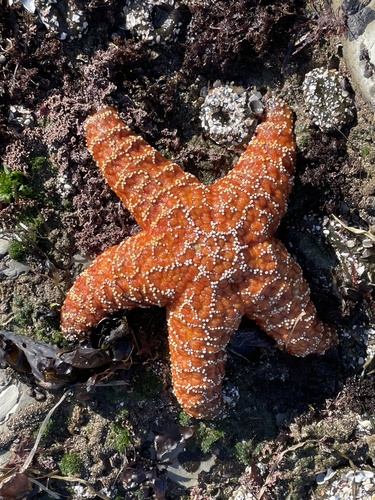
The Chain Tunicate is a fascinating sea creature that looks like a colorful blob! It can form large colonies, making it a fun sight to see in the ocean.
生息地: Chain Tunicates live in marine environments, often attached to rocks and other surfaces in shallow waters.
The Chain Tunicate is a small, colonial invertebrate forming thin, sheet-like encrustations on surfaces. It often displays vibrant colors like purple, orange, or green, with individual zooids arranged in star or chain-like patterns connected by a common vascular system.
カテゴリ
Invertebrateレア度
Common
危険度
0/5 · 危険なし
スナップ
最初にスナップしよう!
A single Chain Tunicate colony can contain thousands of tiny individual animals!
Chain Tunicates have no brain or heart, yet they thrive in the ocean!
These creatures can amazingly filter gallons of water every single day!
They are invasive species, spreading rapidly across new ocean territories!
Chain Tunicate can heal damaged parts of its colony because of amazing regenerative cells that help them survive injuries.
Chain Tunicate can reproduce both sexually and asexually by budding, which helps them spread rapidly and colonize new areas.
Chain Tunicate has a strong adhesive property that helps them securely attach to various underwater surfaces, even smooth ones.
These ocean critters feast on tiny floating particles by filtering seawater through their bodies.
Triopha catalinae
This sea slug sometimes grazes on tunicate colonies as a food source.
Carcinus maenas
These invasive crabs are known to consume tunicates from various surfaces.
Tautogolabrus adspersus
This small fish forages on rocky substrates, sometimes consuming tunicates.
危険度
0/5 · 危険なし
まだ特別な安全上の注意はありません。
2 年
These ocean critters feast on tiny floating particles by filtering seawater through their bodies.
Chain Tunicates live in marine environments, often attached to rocks and other surfaces in shallow waters.
Filter Feeding
10 m
15 cm
3 mm
ズームインしてクラスターを分割し、このオブジェクトが撮影された場所を探索しましょう。
新しい観察が追加されると、ここに最近のスナップが表示されます。