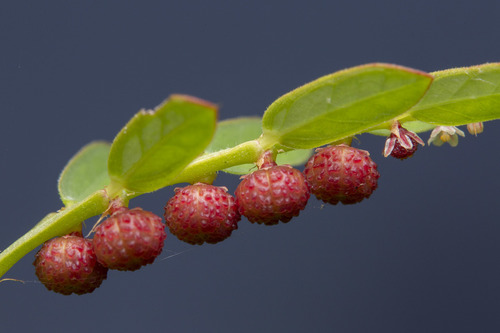


Chamberbitter
phyllanthus urinaria
Chamberbitter, also known as gripeweed or shatterstone, is a warm-season annual herb that has intrigued botanists and gardeners alike. Resembling a miniature mimosa tree, this resilient plant is famous for its rapid growth cycle and aggressive colonization of disturbed soils. While many homeowners view it as an incredibly stubborn weed, Chamberbitter holds a significant place in traditional Eastern medicine, where it has been used for centuries to treat various internal ailments, particularly kidney and gallbladder stones. Its ability to thrive in poor soils and resist common herbicides makes it a fascinating model of survival and adaptation in the plant kingdom.
生息地: Typically found in disturbed soils, gardens, lawns, agricultural fields, and waste areas in warm, humid climates.
Chamberbitter is a small, erect herb growing up to 60 centimeters tall, featuring slender, reddish-green stems. Its small, oblong leaves are arranged in two neat ranks along horizontal branches, closely mimicking a compound feather-like leaf. The most telling identifier is found on the underside of these branches, where tiny, inconspicuous greenish-yellow flowers give way to rows of small, wart-like, round seed capsules hanging directly beneath the leaves.
カテゴリ
植物レア度
Common
危険度
1/5 · 非常に低い
スナップ
最初にスナップしよう!
A single healthy Chamberbitter plant can produce and disperse over 10,000 viable seeds in one season.
Its common name 'gripeweed' and scientific name 'urinaria' both reference its historic use as a herbal remedy for clearing bladder and kidney stones.
The plant contains high levels of tannins, which give it a bitter taste that deters many generalist herbivores from eating it.
Exhibits nyctinastic movements, where its leaves fold together tightly at night or under severe drought stress to reduce water loss.
Develops flowers and seed pods directly on the undersides of its branches, shielding them from intense sunlight and potential herbivores.
As the small capsules dry, they burst open, forcefully ejecting seeds several feet away to maximize colonization efficiency.
As a photoautotrophic plant, Chamberbitter synthesizes its own organic compounds using sunlight, water, carbon dioxide, and essential soil minerals.
Cynodon dactylon
Competes fiercely for soil nutrients, sunlight, and moisture, often choking out turf grass.
Spodoptera eridania
The foliage is occasionally consumed by the larvae of this polyphagous insect pest.
Meloidogyne incognita
This microscopic roundworm infects the root systems, causing root galls and nutrient uptake issues.
このオブジェクトにはまだ特徴バッジが割り当てられていません。
まだ別名はありません。
テーマが追加されると、このオブジェクトのコレクションがここに表示されます。
危険度
1/5 · 非常に低い
まだ特別な安全上の注意はありません。
Chamberbitterを識別する最も簡単な方法は、Snappit自然識別アプリを使用することです。
10-60 cm
0.01-0.2 kg
1 年
As a photoautotrophic plant, Chamberbitter synthesizes its own organic compounds using sunlight, water, carbon dioxide, and essential soil minerals.
Typically found in disturbed soils, gardens, lawns, agricultural fields, and waste areas in warm, humid climates.
7-21 日
ズームインしてクラスターを分割し、このオブジェクトが撮影された場所を探索しましょう。
新しい観察が追加されると、ここに最近のスナップが表示されます。











