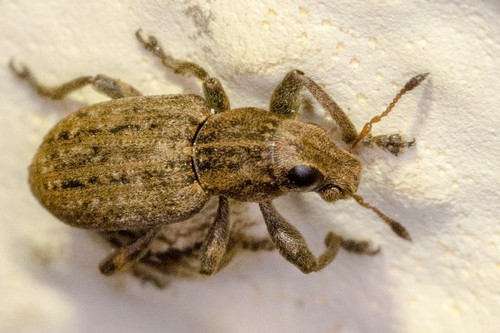


Clover Root Weevil
sitona obsoletus
Meet the Clover Root Weevil (Sitona obsoletus), a tiny but highly influential insect that has made a name for itself in pastures and fields worldwide. Originally native to Europe, this small beetle has traveled globally, frequently establishing itself in places like New Zealand, where it poses a significant challenge to agricultural systems. This species is famous for its strict association with clover plants, which it relies on for both food and shelter throughout its life cycle. While adults munch on the leaves, leaving distinctive notches, their underground larvae feast on the vital nitrogen-fixing nodules of clover roots, disrupting the plant's ability to enrich the soil. Despite its reputation as an agricultural pest, the Clover Root Weevil is a fascinating subject of study in insect behavior, chemical ecology, and biological control.
生息地: Found in temperate grasslands, agricultural pastures, lawns, and meadows where clover species are abundant.
The Clover Root Weevil is a small, robust beetle measuring between 4 and 6 millimeters in length. It features a short, broad snout typical of broad-nosed weevils and is covered in fine, overlapping scales that give it a dull grayish-brown or slightly copper-colored appearance. Running down its back, subtle lighter stripes can sometimes be seen under magnification. Its legs are relatively short and dark, and its body shape is slender and oblong, allowing it to blend seamlessly into the soil, plant litter, or foliage where it feeds and rests.
カテゴリ
昆虫レア度
Common
危険度
1/5 · 非常に低い
スナップ
最初にスナップしよう!
Female Clover Root Weevils can lay up to 800 eggs during their lifetime, scattering them loosely on the soil near clover plants.
In New Zealand, the introduction of the parasitoid wasp Microctonus aethiopoides has successfully helped control this pest, saving the farming industry millions of dollars.
Their larval feeding on clover root nodules disrupts the symbiotic nitrogen-fixing relationship between the plant and Rhizobium bacteria, drastically reducing soil fertility.
Larvae selectively locate and burrow into the nitrogen-fixing nodules of clover roots, consuming the plant's nutrient reserves.
When threatened, adult weevils pull in their legs and drop to the ground, feigning death to blend in with soil debris.
Adults possess specialized mouthparts that allow them to efficiently slice characteristic scalloped notches out of clover leaf margins.
Adults feed exclusively on the foliage of clover and other legumes, while larvae consume the root systems and nitrogen-fixing nodules underground.
Trifolium repens
Primary larval and adult food source, which suffers root and leaf damage from infestation.
Microctonus aethiopoides
A parasitoid wasp introduced to control the weevil population by laying eggs inside adult weevils.
Trifolium pratense
An alternative food plant frequently damaged by adult and larval feeding.
このオブジェクトにはまだ特徴バッジが割り当てられていません。
まだ別名はありません。
テーマが追加されると、このオブジェクトのコレクションがここに表示されます。
危険度
1/5 · 非常に低い
まだ特別な安全上の注意はありません。
Clover Root Weevilを識別する最も簡単な方法は、Snappit自然識別アプリを使用することです。
0.000005+ kg
1+ 年
Adults feed exclusively on the foliage of clover and other legumes, while larvae consume the root systems and nitrogen-fixing nodules underground.
Found in temperate grasslands, agricultural pastures, lawns, and meadows where clover species are abundant.
Grazing Dietchangeswithage
100300+
10+ 日
ズームインしてクラスターを分割し、このオブジェクトが撮影された場所を探索しましょう。
新しい観察が追加されると、ここに最近のスナップが表示されます。












_(6974266104).jpg&width=800)


