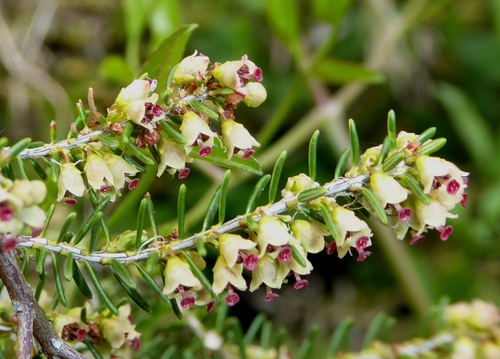


Common Besom Heath
erica scoparia
The Common Besom Heath (Erica scoparia) is a robust, upright evergreen shrub native to the western Mediterranean and southwestern Europe. Thriving in sandy, acidic soils, it is particularly well-suited to coastal dunes, shrublands, and open woodlands. This plant is named for its historic and traditional use in making 'besoms'—traditional sweeping brooms crafted from its long, straight, and flexible branches. In its native ecosystems, it plays a vital role in preventing soil erosion, particularly in coastal zones, and provides structural habitat and cover for a wide variety of birds, insects, and small mammals.
生息地: Typically found in Mediterranean shrublands, coastal sand dunes, and acidic, nutrient-poor soils of open pine and oak woodlands.
This woody evergreen shrub typically grows between 1 and 3 meters tall, displaying a dense, erect, broom-like growth habit with slender, upright branches. Its tiny, needle-like leaves are dark green, measuring only 4 to 7 millimeters in length, and are arranged in whorls of three or four along the stems. Unlike many of its showier relatives in the Ericaceae family, the Common Besom Heath bears small, greenish-brown, bell-shaped flowers that are highly inconspicuous and bloom from late spring to mid-summer.
カテゴリ
植物レア度
Common
危険度
1/5 · 非常に低い
スナップ
最初にスナップしよう!
Its branches are exceptionally resilient and flexible, which made them the ideal material for traditional rustic brooms used in rural Europe.
The specific epithet 'scoparia' is derived from the Latin word for broom, directly referencing its centuries-old use in crafting sweeping brooms.
Unlike most heathers which feature vibrantly colored pink, purple, or white flowers, the Common Besom Heath has greenish-brown flowers that look like tiny buds.
It possesses an underground woody swelling called a lignotuber, which stores nutrients and allows the plant to quickly sprout new stems after a wildfire.
It can thrive in highly acidic and nutrient-deficient soils where many other plant species cannot survive, reducing resource competition.
Its needle-like leaves have a small surface area and a thick waxy cuticle that drastically minimizes water loss during dry summer months.
As an autotrophic plant, it produces its own organic compounds and energy through photosynthesis using sunlight, water, and carbon dioxide.
Apis mellifera
Provides nectar and pollen, though its inconspicuous flowers are primarily pollinated by bees and the wind.
Oryctolagus cuniculus
Rabbits feed on the young shoots, leaves, and seedlings of the heath.
このオブジェクトにはまだ特徴バッジが割り当てられていません。
まだ別名はありません。
テーマが追加されると、このオブジェクトのコレクションがここに表示されます。
危険度
1/5 · 非常に低い
まだ特別な安全上の注意はありません。
Common Besom Heathを識別する最も簡単な方法は、Snappit自然識別アプリを使用することです。
100-300 cm
15-40 年
As an autotrophic plant, it produces its own organic compounds and energy through photosynthesis using sunlight, water, and carbon dioxide.
Typically found in Mediterranean shrublands, coastal sand dunes, and acidic, nutrient-poor soils of open pine and oak woodlands.
ズームインしてクラスターを分割し、このオブジェクトが撮影された場所を探索しましょう。
新しい観察が追加されると、ここに最近のスナップが表示されます。












