

Common Coqui
eleutherodactylus coqui
The Common Coqui (Eleutherodactylus coqui) is a small, beloved frog native to the island of Puerto Rico, where it serves as an iconic cultural symbol. Famous for the incredibly loud and distinctive "co-qui" vocalization produced by males at night, this tiny amphibian has adapted remarkably well to a variety of environments. Although celebrated in its homeland, it has become a highly successful invasive species in other tropical regions, such as Hawaii, where its high-volume nighttime choruses and lack of natural predators have caused significant ecological and acoustic disruption.
生息地: Found in humid tropical forests, gardens, and urban green spaces, typically resting on leaves, tree trunks, or under ground litter.
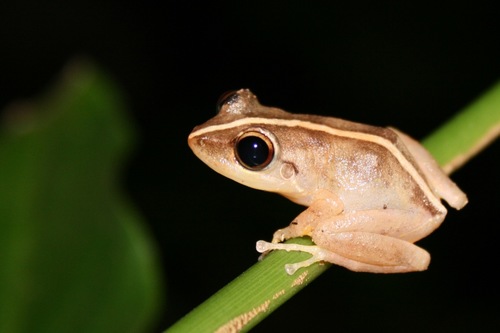
This small frog typically ranges from 2.5 to 5.5 centimeters in length, with females being notably larger than males. Its coloration is highly variable, ranging from light yellow to deep brown, often with chevron markings or lighter lateral stripes down its back. It has a broad head, large, prominent gold or bronze eyes with horizontal pupils, and characteristic wide, adhesive toe pads that enable agile climbing on leaves and vertical surfaces without the aid of webbed feet.
カテゴリ
両生類レア度
Common
危険度
1/5 · 非常に低い
スナップ
最初にスナップしよう!
Because they do not need ponds or pools of standing water to reproduce, they can colonize high tree canopies and dry urban environments easily.
Only male coquis sing; the 'co' portion of the call is aimed at defending territory from other males, while the 'qui' portion is meant to attract females.
The male coqui is a dedicated father, guarding the terrestrial eggs for weeks to keep them moist and protect them from predators.
Males produce a powerful two-note call reaching up to 100 decibels, with the 'co' frequency deterring male rivals and the 'qui' frequency attracting females.
They lay terrestrial eggs that completely bypass the aquatic tadpole stage, hatching directly into tiny, fully formed froglets.
Specialized, expanded pads on their toes create capillary adhesion, allowing them to effortlessly scale smooth vertical leaves and wet tree trunks.
The Common Coqui is an opportunistic nocturnal predator that consumes a vast quantity of terrestrial invertebrates each night, hunting primarily in the forest understory.
年齢による違い: Juveniles feed on much smaller prey such as mites, springtails, and tiny flies, transitioning to larger insects and spiders as they grow.
Megascops nudipes
The Common Coqui is a frequent nocturnal prey item for this endemic bird of prey in Puerto Rico.
Chilabothrus inornatus
This large snake actively hunts adult coqui frogs in the forest canopies at night.
Aedes albopictus
The Common Coqui opportunistically preys upon adult mosquitoes, helping to control local pest populations.
このオブジェクトにはまだ特徴バッジが割り当てられていません。
まだ別名はありません。
テーマが追加されると、このオブジェクトのコレクションがここに表示されます。
危険度
1/5 · 非常に低い
まだ特別な安全上の注意はありません。
Common Coquiを識別する最も簡単な方法は、Snappit自然識別アプリを使用することです。
2-6 cm
0.002-0.008 kg
4-6 年
The Common Coqui is an opportunistic nocturnal predator that consumes a vast quantity of terrestrial invertebrates each night, hunting primarily in the forest understory.
Found in humid tropical forests, gardens, and urban green spaces, typically resting on leaves, tree trunks, or under ground litter.
Ambush
15-45
ズームインしてクラスターを分割し、このオブジェクトが撮影された場所を探索しましょう。
新しい観察が追加されると、ここに最近のスナップが表示されます。