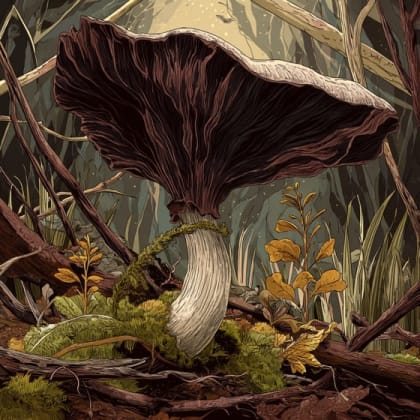
Cortinariaceae
cortinariaceae
Cortinariaceae mushrooms are fascinating fungi that often have colorful caps and are found in many forests. They play an important role in nature by helping to break down dead plants and trees!
生息地: Cortinariaceae mushrooms typically grow in moist, shaded areas of forests.
The Cortinariaceae has a diverse appearance, often featuring rust-brown spores that can dust the stem or a spiderweb-like veil. Caps vary from conical to convex, frequently displaying scaly or silky textures in earthy tones like brown, purple, or olive.
カテゴリ
菌類レア度
Common
危険度
1/5 · 非常に低い
スナップ
最初にスナップしよう!
Even tiny pieces of certain Cortinariaceae can cause serious kidney damage if eaten.
Many species have a unique "cortina," a spiderweb-like veil, protecting their young gills.
Some Cortinarius mushrooms smell like radishes, a surprising and helpful identification clue!
The Cortinariaceae family is one of the largest mushroom groups, with thousands of species!
Cortinariaceae can form mycorrhizal networks that help trees absorb essential nutrients and water from the soil.
Cortinariaceae has compounds that make them poisonous, deterring animals from eating them and protecting their spores.
Many species have rust-brown spores that readily detach, helping them spread far and wide to new locations.
Picea abies
forming vital mycorrhizal partnerships
Quercus robur
sharing nutrients through root connections

Arion ater
slugs consume their mushroom caps and stems
Odocoileus virginianus
deer may browse on available woodland fungi
危険度
1/5 · 非常に低い
Always ask an adult before touching or picking mushrooms.
3-18 cm
poisonous
2-15 cm
Cortinariaceae mushrooms typically grow in moist, shaded areas of forests.
soil
Summer to fall
Rust-brown
ズームインしてクラスターを分割し、このオブジェクトが撮影された場所を探索しましょう。
新しい観察が追加されると、ここに最近のスナップが表示されます。