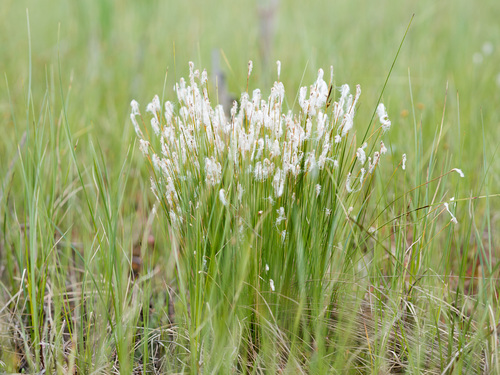


Cotton Deergrass
trichophorum alpinum
Cotton Deergrass is a delicate, perennial sedge that brings a touch of softness to cold northern wetlands, fens, and peat bogs. Growing in dense, grassy clumps, this hardy plant is famous for the fluffy, cotton-like seed heads that develop after it flowers, transforming barren boggy landscapes into shimmering fields of white. It serves as an important ecological pioneer, stabilizing waterlogged soils and contributing to the slow, ancient process of peat formation. Its presence is highly indicative of pristine, undisturbed wetland ecosystems.
生息地: Found in cold, acidic peatlands, fens, and subalpine bogs across northern temperate and boreal regions.
This perennial sedge grows in compact tufts reaching 10 to 40 centimeters in height, characterized by slender, erect, and slightly triangular grayish-green stems. In early spring, it produces small, inconspicuous brown flower spikelets at the tips of its stems. As summer progresses, these flowers give way to dazzling, silky white bristles that extend outward up to 2 centimeters, creating a distinctive cotton-ball appearance that makes the plant highly visible against dark wetland backgrounds.
カテゴリ
植物レア度
Common
危険度
1/5 · 非常に低い
スナップ
最初にスナップしよう!
Despite its common name, Cotton Deergrass is a true sedge belonging to the Cyperaceae family rather than a true grass.
Historically, the soft, downy bristles of deergrasses and cottongrasses were harvested in northern regions to stuff pillows and mattresses when feathers were scarce.
The fluffy 'cotton' of this plant is actually made of highly modified sepals and petals that elongate into woolly bristles after pollination.
Utilizes a dense, creeping network of rhizomes to anchor itself securely in waterlogged, shifting peat soils, preventing soil erosion.
Develops long, ultra-lightweight cottony bristles that act as sails, allowing mountain and wetland breezes to carry its seeds over vast distances.
Thrives in highly acidic, nutrient-deficient soils by highly efficiently conserving and recycling essential minerals within its perennial root systems.
As a photoautotrophic plant, Cotton Deergrass produces its own energy via photosynthesis, utilizing sunlight, carbon dioxide, and water while absorbing key minerals from its acidic substrate.
Microtus oeconomus
The fresh shoots and nutrient-dense seeds of Cotton Deergrass are consumed by tundra voles during the summer months.
Sphagnum capillifolium
Cotton Deergrass grows in close association with sphagnum mosses, which help maintain the acidic, moist conditions the sedge needs to survive.
このオブジェクトにはまだ特徴バッジが割り当てられていません。
まだ別名はありません。
テーマが追加されると、このオブジェクトのコレクションがここに表示されます。
危険度
1/5 · 非常に低い
まだ特別な安全上の注意はありません。
Cotton Deergrassを識別する最も簡単な方法は、Snappit自然識別アプリを使用することです。
10-40 cm
3-10 年
As a photoautotrophic plant, Cotton Deergrass produces its own energy via photosynthesis, utilizing sunlight, carbon dioxide, and water while absorbing key minerals from its acidic substrate.
Found in cold, acidic peatlands, fens, and subalpine bogs across northern temperate and boreal regions.
ズームインしてクラスターを分割し、このオブジェクトが撮影された場所を探索しましょう。
新しい観察が追加されると、ここに最近のスナップが表示されます。




















