

Cottony Cushion Scale
icerya purchasi
The Cottony Cushion Scale (Icerya purchasi) is a notorious scale insect originally native to Australia, but now found globally. It is famous for its devastating historical impact on citrus orchards, which ultimately led to one of the most successful biological control triumphs in entomological history. These tiny sap-sucking insects form dense colonies on the branches, twigs, and leaves of their host plants, draining vital nutrients and secreting sticky honeydew.
生息地: Found in warm-temperate and tropical regions, typically on citrus trees, ornamental shrubs, and woody plants in agricultural areas and gardens.
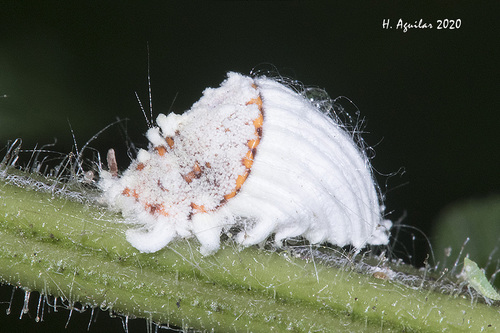
The adult female Cottony Cushion Scale is easily identified by her distinctive white, elongated, and deeply fluted egg sac, which is made of a waxy substance and can reach up to 1.5 centimeters in length. The insect's actual body is relatively small, reddish-brown, and nestled at one end of this prominent, cottony sac. Immature nymphs, or crawlers, are bright red with dark legs and antennae, lacking the massive white waxy coating of the adults.
カテゴリ
昆虫レア度
Common
危険度
1/5 · 非常に低い
スナップ
最初にスナップしよう!
Almost all individuals are hermaphrodites that fertilize their own eggs, while pure males are extremely rare and develop from unfertilized eggs.
Ants will actively farm and protect these scales from predators in exchange for the sugary honeydew they secrete.
The large white 'cushion' on the insect's rear is not its body, but an empty wax sac designed solely to shelter up to 1,000 eggs.
This species was the target of the world's first highly successful classical biological control program in 1888, saving the California citrus industry from collapse.
It secretes a dense, ribbed, white waxy ovisac that protects its eggs from both predators and environmental dehydration.
Most individuals are self-fertilizing hermaphrodites, allowing a single scale insect to rapidly colonize a new host plant without needing a mate.
It excretes excess plant sugars as sticky honeydew, which attracts protective ants and fosters the growth of sooty mold.
Feeds on the nutrient-rich phloem sap of various woody host plants, particularly citrus and acacias.
年齢による違い: Crawlers seek out thin leaf veins, whereas mature females settle permanently on larger twigs and branches.
Rodolia cardinalis
The Vedalia beetle is a famous predator introduced globally to control cottony cushion scale populations.
Cryptochaetum iceryae
A tiny parasitic fly whose larvae develop inside the scale insect, acting as an effective natural control agent.
Citrus sinensis
The primary host plant where the scale insect feeds on phloem sap, often causing leaf drop and branch dieback.
このオブジェクトにはまだ特徴バッジが割り当てられていません。
まだ別名はありません。
テーマが追加されると、このオブジェクトのコレクションがここに表示されます。
危険度
1/5 · 非常に低い
まだ特別な安全上の注意はありません。
Cottony Cushion Scaleを識別する最も簡単な方法は、Snappit自然識別アプリを使用することです。
1+ cm
0.00001+ kg
0+ 年
Feeds on the nutrient-rich phloem sap of various woody host plants, particularly citrus and acacias.
Found in warm-temperate and tropical regions, typically on citrus trees, ornamental shrubs, and woody plants in agricultural areas and gardens.
Grazing
500+
ズームインしてクラスターを分割し、このオブジェクトが撮影された場所を探索しましょう。
新しい観察が追加されると、ここに最近のスナップが表示されます。