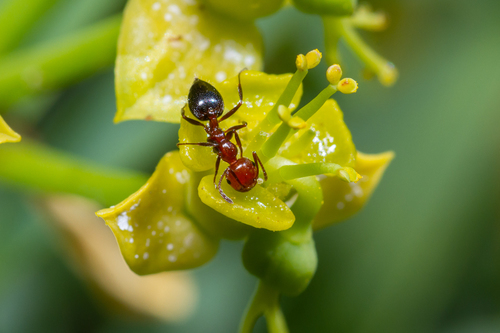


Crematogaster Alluaudi
crematogaster alluaudi
Crematogaster alluaudi is a fascinating species of acrobat ant native to the island ecosystems of the western Indian Ocean, particularly Madagascar. Belonging to the highly diverse genus Crematogaster, these ants are famous for their unique ability to raise their abdomen over their head when threatened, a defensive posture resembling an acrobat. They typically live in highly organized colonies nestled in woody plants and forest litter. These industrious insects play a key role in their native ecosystems by cycling nutrients, dispersing seeds, and engaging in complex symbiotic relationships with sap-feeding insects.
生息地: Found in tropical dry forests, littoral woodlands, and humid forests of Madagascar, typically nesting in hollow twigs, rotting logs, or under tree bark.
These small ants, typically measuring between 3 to 5 millimeters in length, are characterized by a glossy, dark brown to black coloration, though some specimens may exhibit deep reddish-brown tones. Their most distinguishing feature is the heart-shaped gaster (abdomen), which is flat on the upper surface and pointed at the rear. The gaster is attached to the upper surface of the petiole, enabling the characteristic upward-bending behavior. They have standard biting mandibles and small, black compound eyes.
カテゴリ
昆虫レア度
Common
危険度
1/5 · 非常に低い
スナップ
最初にスナップしよう!
Their common name 'acrobat ant' comes from their comical ability to lift their entire abdomen over their body, making them look like they are doing a handstand.
These ants often construct delicate shelters made of chewed wood pulp, leaf fibers, and soil—similar to wasp nests—to protect their sap-sucking insect partners.
Unlike many other ants that use a functional stinger to inject venom, Crematogaster species use a spade-like structure on their rear to brush venom onto their targets.
When threatened, these ants raise their heart-shaped abdomen over their thorax and head to present defensive secretions to potential predators.
They utilize a spatulate, non-functional stinger to wipe toxic and repellent chemical defenses directly onto competing ants and predators.
They actively farm sap-sucking insects, constructing protective shelters over them to guard them from predators in exchange for sweet honeydew.
They survive primarily on sugary liquids such as honeydew and floral nectar, supplemented with small insects and organic forest debris.
年齢による違い: Larvae require a high-protein diet of insect prey for growth, while adult workers consume primarily carbohydrates for daily foraging energy.
Furcifer pardalis
The Panther Chameleon feeds on foraging workers when they traverse low forest vegetation.
Pulvinaria psidii
Crematogaster alluaudi protects this scale insect from predators to harvest its sugary secretions.
Pheidole megacephala
Competes fiercely with this invasive ant species for nesting territory and foraging trails in disrupted forest habitats.
このオブジェクトにはまだ特徴バッジが割り当てられていません。
まだ別名はありません。
テーマが追加されると、このオブジェクトのコレクションがここに表示されます。
危険度
1/5 · 非常に低い
まだ特別な安全上の注意はありません。
Crematogaster Alluaudiを識別する最も簡単な方法は、Snappit自然識別アプリを使用することです。
0.000001-0.00001 kg
1-3 年
They survive primarily on sugary liquids such as honeydew and floral nectar, supplemented with small insects and organic forest debris.
Found in tropical dry forests, littoral woodlands, and humid forests of Madagascar, typically nesting in hollow twigs, rotting logs, or under tree bark.
Foraging
100-1000
10-25 日
ズームインしてクラスターを分割し、このオブジェクトが撮影された場所を探索しましょう。
新しい観察が追加されると、ここに最近のスナップが表示されます。












