Deertongue
dichanthelium clandestinum
Deertongue is a soft, grassy plant that can be found in many forests and meadows! Its leaves are shaped like tongues, and they dance in the breeze, making it fun to watch!
生息地: Deertongue grows in forests, meadows, and grasslands, often in shaded areas.
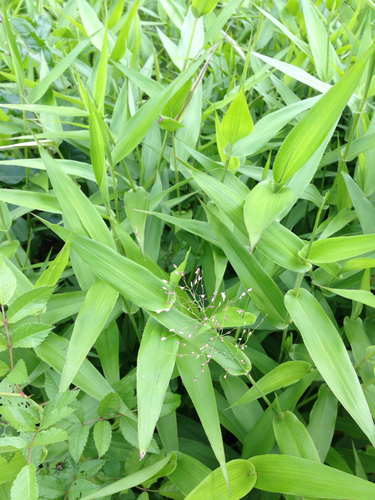
The Deertongue has broad, flat, tongue-shaped leaves, often quite hairy and rough to the touch. Its sturdy, upright stems can reach up to three feet tall. The flowers are tiny, green spikelets, often hidden among the leaves or along the stem.
カテゴリ
植物レア度
Common
危険度
0/5 · 危険なし
スナップ
最初にスナップしよう!
Deertongue can prevent soil erosion on hillsides by forming a dense mat with its roots!
Find it often near wetlands or shady woods, where it loves the moist, rich soil!
Its scientific name 'clandestinum' means 'hidden,' referring to its tiny, often unseen flowers!
This grass is a super snack for deer and other grazers, helping them stay full and healthy.
Deertongue can grow well in low light, helping it thrive in the shadowy understory of forests where other plants struggle.
Deertongue has rhizomes, underground stems that help it spread efficiently and form dense, stable colonies.
Deertongue's hairy leaves can help collect dew and moisture from the air, assisting its survival in drier spells.
Odocoileus virginianus
A common browser of its leaves and stems

Peromyscus leucopus
Feeds on its small seeds and plant parts

Melanoplus differentialis
Chews on its leaves and tender shoots
Cardinalis cardinalis
Uses dense clumps for cover and nesting
危険度
0/5 · 危険なし
まだ特別な安全上の注意はありません。
30-90 cm
30-60 cm
0.3-0.4 cm
Late spring to summer
いいえ
なし
多年生
風
ズームインしてクラスターを分割し、このオブジェクトが撮影された場所を探索しましょう。
新しい観察が追加されると、ここに最近のスナップが表示されます。