
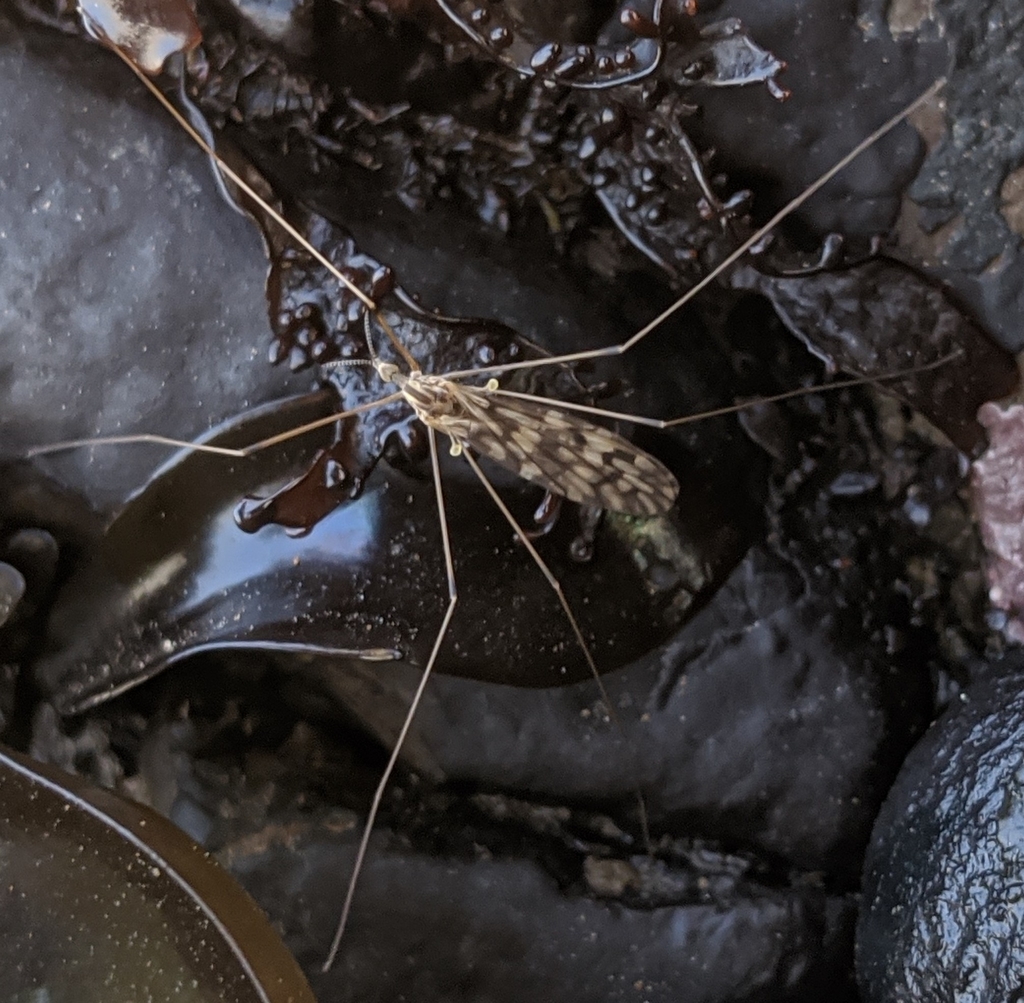





Dicranomyia marmorata
Dicranomyia marmorata
Dicranomyia marmorata is a special type of fly that has beautiful patterns on its wings. These tiny insects love to live in wet places and are often seen near water, making them fun to spot!
生息地: Wetlands
The Dicranomyia marmorata is a small, slender cranefly characterized by its beautifully mottled, marble-like wings, which give it its name. It has a brownish or grayish body and notably long, delicate legs that easily break off. This fly lacks the piercing mouthparts of mosquitoes.
カテゴリ
昆虫レア度
Common
危険度
1/5 · 非常に低い
スナップ
最初にスナップしよう!
Even though they have very long, spindly legs, these flies are quite slow and clumsy fliers!
Many cranefly larvae can actually live underwater for months, breathing through special tubes!
The 'marmorata' in its name means 'marbled', perfectly describing its unique, patterned wings!
They are sometimes mistaken for giant mosquitoes, but these harmless insects never bite humans!
Dicranomyia marmorata has beautifully mottled wings that helps them disappear against dappled light and decaying leaves on the forest floor.
Dicranomyia marmorata larvae can break down decaying plant matter because of their specialized mouthparts that help them recycle forest nutrients.
Dicranomyia marmorata uses its long, delicate antennae that helps them find mates and navigate through their damp environments.
Larvae are nature's recyclers, munching on decaying plants; adults may sip nectar or just water.
年齢による違い: Larvae are detritivores, adults may feed on nectar or just water.
Erithacus rubecula
Common garden bird that preys on various insects.
Araneus diadematus
Often traps flies in its intricate orb webs.
Quercus robur
Larvae thrive on decaying oak leaves and wood as food.
異なる色の斑点や模様がある。
単独行動をとる動物は、繁殖や子育ての時を除き、生涯のほとんどを1匹で生活します。
空中性の生き物は、生涯の大部分を空中で過ごし、狩りや渡り、巣作りなど様々な活動を飛びながら行います。
この特性は、植物と動物の両方を食べる生物を示します。

カラフルとは、生物や物体が明るくはっきりとした多様な色合いを見せることを指します。

この生息地特性は、湿地(年間を通して、または季節的に水に浸かっている沼や湿原などの土地)で見られる種を示します。

その存在と役割が環境に対して極めて大きな影響を与える種を指します。

昼行性の動物は主に日中に活動し、通常は夜間に休息や睡眠をとります。

淡水の生息地には、川、湖、池、湿地などの塩分を含まない水辺の環境が含まれ、多くの生物にとって不可欠な場所です。

花粉を運び、植物の受粉と繁殖を助ける生物のことを指します。
まだ別名はありません。
危険度
1/5 · 非常に低い
These flies are harmless, but it's always good to watch insects from a distance.
8-15 mm
4-7 mm
7-14 日
5 km/h
Larvae are nature's recyclers, munching on decaying plants; adults may sip nectar or just water.
Wetlands
Foraging
6
ズームインしてクラスターを分割し、このオブジェクトが撮影された場所を探索しましょう。
新しい観察が追加されると、ここに最近のスナップが表示されます。




_(10180627194).jpg&width=800)









