
.jpg&width=800)





Eastern Amberwing
Perithemis tenera
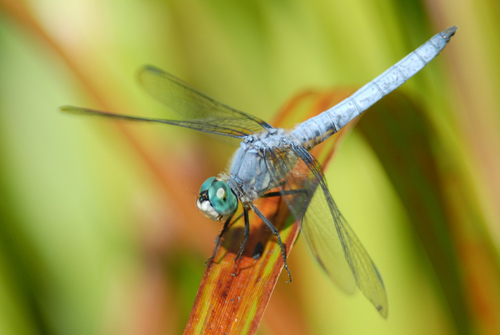
The Eastern Amberwing is a small dragonfly with bright orange wings. They love to flutter around ponds and wetlands, showing off their beautiful colors in the sunlight.
生息地: Wetlands
The Eastern Amberwing male has striking, entirely amber-orange wings and a reddish-orange body. Females possess clear wings with amber patches at the base and a brown spot near the tip, alongside a yellowish body. Its distinct wing coloration makes it easily identifiable near water.
カテゴリ
昆虫レア度
Common
危険度
1/5 · 非常に低い
スナップ
最初にスナップしよう!
Its babies live underwater for up to a year, breathing with gills!
Males sometimes pretend to be females to sneak past other dominant males!
The female Eastern Amberwing lays her tiny eggs by simply tapping the water!
These small dragonflies can fly backward, sideways, or even hover perfectly still!
Eastern Amberwings can spot tiny flying prey from a distance because of their large, multifaceted compound eyes.
Eastern Amberwings can fly in any direction, including backward, because of their independently operating four wings that help them dodge.
The Eastern Amberwing can warm up quickly by basking in the sun because of its dark body and broad wings that absorb heat.
Eastern Amberwing larvae can breathe underwater because of specialized gills, allowing them to live hidden in aquatic environments.
As an adult, this dragonfly is an insectivore, expertly catching small flying insects like mosquitoes and flies.
年齢による違い: Nymphs hunt aquatic invertebrates and larvae, while adults exclusively prey on flying insects.
Aedes aegypti
eats these common blood-feeding insects
Musca domestica
captures and consumes these flying insects
Rana catesbeiana
adults can be prey for larger amphibians
Anax junius
larger dragonflies may prey on them
カラフルとは、生物や物体が明るくはっきりとした多様な色合いを見せることを指します。
多種多様な花粉媒介者(ポリネーター)にとって特に魅力的で有益な植物を表します。
この特性は、主に昆虫やその他の小型無脊椎動物を食べる生物を示します。
この生息地特性は、湿地(年間を通して、または季節的に水に浸かっている沼や湿原などの土地)で見られる種を示します。

この特性は、狩り、逃走、または移動において、並外れた素早さを見せる生物を示します。

昼行性の動物は主に日中に活動し、通常は夜間に休息や睡眠をとります。

同種の標準や平均と比べて著しく小さい種に関する特徴。

淡水の生息地には、川、湖、池、湿地などの塩分を含まない水辺の環境が含まれ、多くの生物にとって不可欠な場所です。

花粉を運び、植物の受粉と繁殖を助ける生物のことを指します。
まだ別名はありません。
危険度
1/5 · 非常に低い
Dragonflies are friendly and won't hurt you, but it's best to watch them from a distance.
40-50 mm
19-28 mm
28-42 日
18 km/h
As an adult, this dragonfly is an insectivore, expertly catching small flying insects like mosquitoes and flies.
Wetlands
Pursuit
6
ズームインしてクラスターを分割し、このオブジェクトが撮影された場所を探索しましょう。
新しい観察が追加されると、ここに最近のスナップが表示されます。





.jpg&width=800)




.jpg&width=800)




