
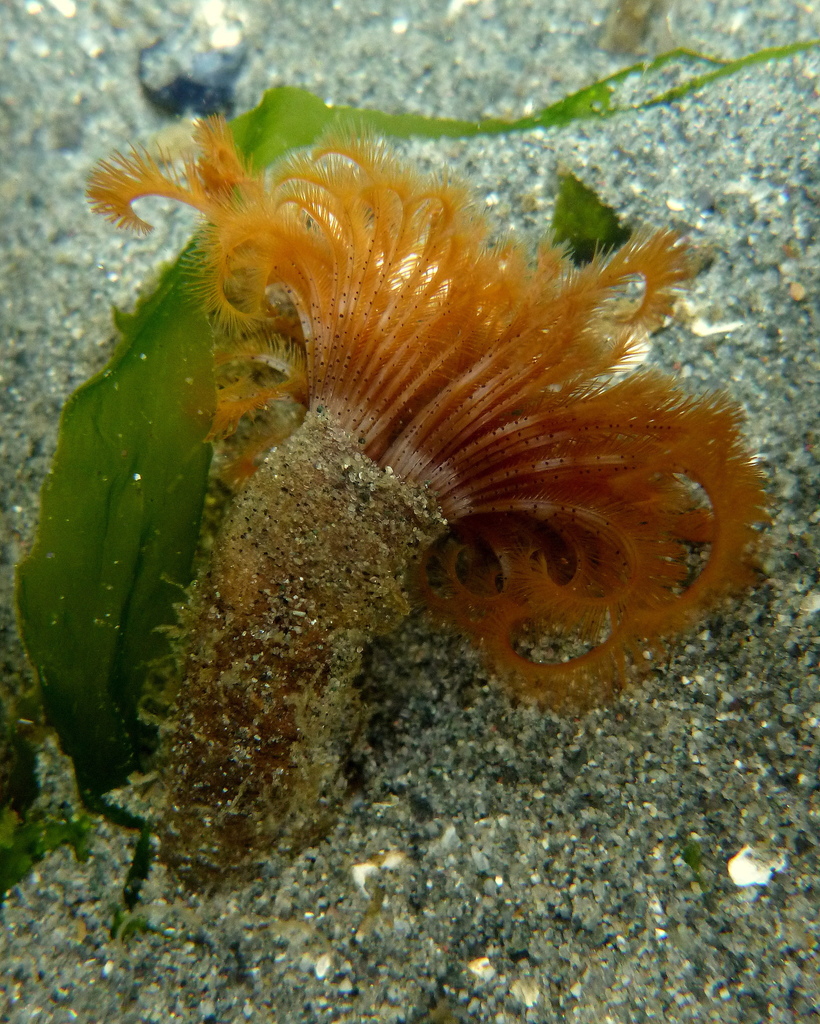





Eudistylia Catharinae
eudistylia catharinae
The Eudistylia Catharinae is a fascinating marine worm that builds colorful tubes on the ocean floor. These worms are great at helping to clean the sea by filtering tiny particles from the water!
生息地: Eudistylia Catharinae lives in shallow coastal waters, typically found in sandy or muddy substrates.
The Eudistylia Catharinae has a striking, feathery plume that extends from a leathery, mud-encrusted tube. Its elegant crown is often banded with vibrant shades of red, orange, white, or brown, creating a beautiful contrast with its darker, sandy-colored tube. This distinctive, delicate structure sets it apart from simpler tube worms.
カテゴリ
Invertebrateレア度
Common
危険度
1/5 · 非常に低い
スナップ
最初にスナップしよう!
Believe it or not, this worm can grow a new 'head' if its original one gets eaten by a predator!
Its elaborate tube is so strong, it can withstand strong ocean currents and hungry critters!
Some of these incredible tube worms have been observed living for over 15 years!
Wow! Its colorful, feathery 'head' is actually a super efficient breathing and eating machine!
Eudistylia Catharinae can rapidly retract its delicate plume into its protective tube because of strong muscles, helping them escape predators in a flash.
Eudistylia Catharinae can construct a sturdy, flexible tube from secreted mucus and surrounding sediment, that helps them stay anchored and safe.
Eudistylia Catharinae has an intricate crown of feathery tentacles that helps them efficiently filter tiny food particles from the surrounding seawater.
This worm is a tiny ocean janitor, using its feathery crown to catch microscopic food from the water.

Pycnopodia helianthoides
hunts its soft body from the tube.
Cancer productus
sometimes pulls worms from their tubes.
Mytilus californianus
competes for space on hard surfaces.
危険度
1/5 · 非常に低い
まだ特別な安全上の注意はありません。
20 cm
30 cm
2.5 cm
15 年
10 年
This worm is a tiny ocean janitor, using its feathery crown to catch microscopic food from the water.
Eudistylia Catharinae lives in shallow coastal waters, typically found in sandy or muddy substrates.
Filter Feeding
ズームインしてクラスターを分割し、このオブジェクトが撮影された場所を探索しましょう。
新しい観察が追加されると、ここに最近のスナップが表示されます。















-left_01.jpg&width=800)

