

Euodynerus Bidens
euodynerus bidens
Euodynerus bidens is an intriguing solitary wasp belonging to the potter wasp subfamily, Eumeninae. Known for its industrious nature, this insect plays a crucial role in ecological systems as both a pollinator of flowering plants and a natural control agent for pest populations. Unlike social wasps, females of this species act independently, constructing or utilizing small, tube-like cavities to rear their young. They are highly efficient hunters, searching for caterpillars to provision their nests, ensuring their larvae have a fresh food source upon hatching. Observing these wasps provides a fascinating glimpse into the complex nesting behaviors of solitary hymenopterans, showing how one small insect can balance predatory efficiency with delicate flower visitation.
生息地: Found in open forests, shrublands, meadows, and suburban gardens where nesting sites and flowering plants are abundant.
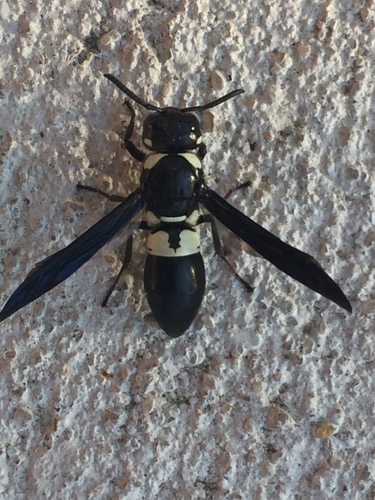
This medium-sized wasp features a striking black body adorned with vivid yellow to reddish-orange bands across its abdomen and thorax. It is characterized by two distinct tooth-like projections or spots on its metanotum, which inspire its specific name 'bidens'. Its wings are translucent with a dark brownish or smoky tint, folding longitudinally when at rest. Its legs are typically dark reddish-brown, and its antennae are black, sometimes with lighter tips on males. Females possess a strong ovipositor modified into a stinger used primarily for paralyzing prey.
カテゴリ
昆虫レア度
Common
危険度
1/5 · 非常に低い
スナップ
最初にスナップしよう!
The name 'bidens' refers to the two small, sharp, tooth-like projections located on the wasp's metanotum.
To protect their young, mothers seal each chamber of their nest with a precise mixture of soil and saliva, creating a hard, protective plaster.
Unlike social hornets, Euodynerus bidens is solitary and non-aggressive, only stinging humans if directly handled or threatened.
The female wasp uses a highly targeted venomous sting to paralyze caterpillars without killing them, keeping the food fresh for her larvae.
Utilizes specialized mud-daubing techniques or modifies existing wooden crevices to build secure, compartmentalized chambers for egg-laying.
Folds its wings lengthwise at rest, reducing its profile to easily squeeze into tight nesting cavities and cracks.
Adults feed primarily on flower nectar for energy, while the larvae are strictly carnivorous, feeding on paralyzed caterpillars provided by the mother wasp.
年齢による違い: Larvae are strictly insectivorous, consuming paralyzed prey, whereas adults transition entirely to consuming liquid sugars from nectar and plant juices.
Cephalanthus occidentalis
Adult wasps visit these flowers for nectar, acting as minor pollinators.
Spodoptera frugiperda
The female hunts these larvae to provision her nest chambers.
Chrysis angolensis
A parasitic cuckoo wasp that sneaks into the nests to lay eggs on the provisioned food.
このオブジェクトにはまだ特徴バッジが割り当てられていません。
まだ別名はありません。
テーマが追加されると、このオブジェクトのコレクションがここに表示されます。
危険度
1/5 · 非常に低い
まだ特別な安全上の注意はありません。
Euodynerus Bidensを識別する最も簡単な方法は、Snappit自然識別アプリを使用することです。
1-2 cm
2-3 cm
0.0001-0.0003 kg
0 年
15 km/h
Adults feed primarily on flower nectar for energy, while the larvae are strictly carnivorous, feeding on paralyzed caterpillars provided by the mother wasp.
Found in open forests, shrublands, meadows, and suburban gardens where nesting sites and flowering plants are abundant.
ズームインしてクラスターを分割し、このオブジェクトが撮影された場所を探索しましょう。
新しい観察が追加されると、ここに最近のスナップが表示されます。