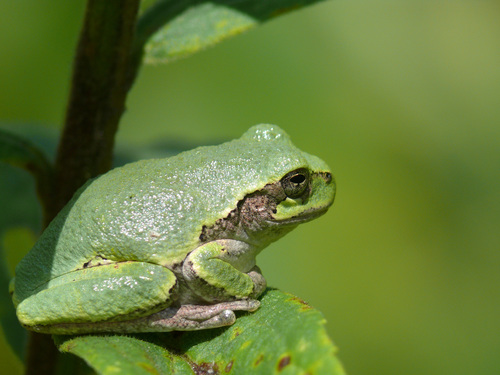


Gray Treefrog Species Complex
dryophytes versicolor
The Gray Treefrog Species Complex is a fascinating duo of practically indistinguishable amphibians: the Eastern Gray Treefrog (Dryophytes versicolor) and Cope's Gray Treefrog (Dryophytes chrysoscelis). These small, arboreal acrobats are renowned for their remarkable ability to change color, shifting from mottled gray to striking shades of green or brown to perfectly match their surroundings. This incredible camouflage makes them masters of disguise among the tree bark and lichen of their woodland homes. What truly sets this complex apart is a hidden genetic secret. While they look identical to the naked eye, the Eastern Gray Treefrog has twice the number of chromosomes as its sibling species. The easiest way to tell them apart in the wild is by listening to their trilling calls during the spring breeding season. Found clinging to branches, resting on leaves, or hanging around porch lights, these adaptable frogs are a beloved, vocal staple of eastern North American forests.
生息地: Found predominantly in deciduous forests, woodlands, and suburban areas, typically living high up in the canopy but descending to shallow, fishless wetlands and ephemeral pools to breed.
Measuring just 3 to 6 centimeters in length, Gray Treefrogs have a somewhat warty, textured skin that helps them blend seamlessly into rough tree bark. Their base coloration is highly variable and can change rapidly, ranging from mottled gray to light green or brown, typically marked with darker, lichen-like blotches on their back. A key identifying feature is a distinct, dark-outlined light spot beneath each eye. When they leap, they reveal bright, flash-colored patches of yellow or orange on the concealed inner surfaces of their hind legs, an adaptation meant to startle predators. They also possess large, sticky toe pads specifically adapted for expert climbing.
カテゴリ
両生類レア度
Common
危険度
1/5 · 非常に低い
スナップ
最初にスナップしよう!
Eastern Gray Treefrogs are tetraploid, meaning they have four sets of chromosomes, while Cope's Gray Treefrogs are diploid and have the standard two sets.
The Eastern Gray Treefrog and Cope's Gray Treefrog look so identical that even experts usually have to rely on their distinct mating calls or a DNA test to tell them apart.
The bright orange or yellow patches hidden on the inside of their legs are called 'flash colors,' designed to temporarily startle and confuse predators as the frog leaps away.
They are masters of winter survival; they can survive being frozen solid under leaf litter for months, with their heart completely stopping until they thaw out in the spring.
They can rapidly change their skin color from gray to green or brown depending on temperature, humidity, and their surroundings to blend in with bark or leaves.
During winter, they accumulate glycerol in their body tissues, acting as a biological antifreeze that allows them to survive even if a large portion of their bodily fluids freeze solid.
Specialized, mucus-secreting toe pads create surface tension and capillary action, allowing them to effortlessly scale smooth surfaces, vertical tree trunks, and even glass windows.
Gray treefrogs are opportunistic insectivores that hunt a wide variety of small terrestrial and arboreal invertebrates.
年齢による違い: Tadpoles are primarily herbivorous and detritivorous, feeding on algae and plant matter, before transitioning to a strictly carnivorous diet upon metamorphosis.
Thamnophis sirtalis
Common predator of treefrogs and their tadpoles in woodland habitats.
Cyanocitta cristata
Avian predator that frequently hunts resting treefrogs in the forest canopy.
Culex pipiens
Treefrogs consume adult mosquitoes, helping to regulate their populations.
このオブジェクトにはまだ特徴バッジが割り当てられていません。
まだ別名はありません。
テーマが追加されると、このオブジェクトのコレクションがここに表示されます。
危険度
1/5 · 非常に低い
まだ特別な安全上の注意はありません。
Gray Treefrog Species Complexを識別する最も簡単な方法は、Snappit自然識別アプリを使用することです。
3-6 cm
0.005-0.02 kg
5-9 年
Gray treefrogs are opportunistic insectivores that hunt a wide variety of small terrestrial and arboreal invertebrates.
Found predominantly in deciduous forests, woodlands, and suburban areas, typically living high up in the canopy but descending to shallow, fishless wetlands and ephemeral pools to breed.
Ambush
1000-2000
ズームインしてクラスターを分割し、このオブジェクトが撮影された場所を探索しましょう。
新しい観察が追加されると、ここに最近のスナップが表示されます。
Maine, US
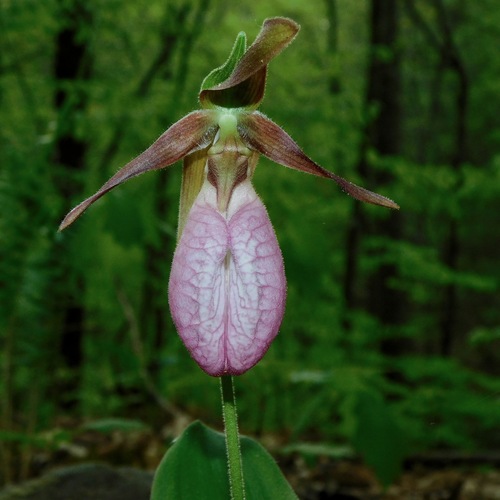
ここで見られるかも ピンクレディスリッパ, コモンリボンヘビ と カミツキガメ.
ガイドを見る →

Rhode Island, US
ここで見られるかも マルハナバチ, ナミテントウ と アメリカリョウブ.
ガイドを見る →

Connecticut, US
ここで見られるかも 干し草の香りのシダ, カナダマイフラワー と アメリカアカガエル.
ガイドを見る →

New Hampshire, US
ここで見られるかも Monarch, ストローブマツ と ピンクレディスリッパ.
ガイドを見る →

Michigan, US
ここで見られるかも カナダヅル, Gray Treefrog と シチメンチョウ.
ガイドを見る →

Connecticut, US
ここで見られるかも ボブキャット, Monarch と Knobfin Sculpin.
ガイドを見る →









.jpg&width=800)









