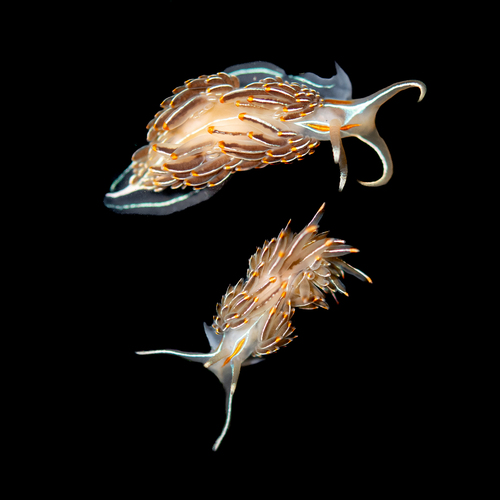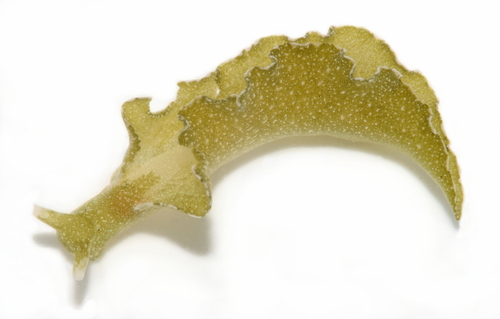


Hedgpeth'S Sapsucker
elysia hedgpethi
Hedgpeth's Sapsucker (Elysia hedgpethi) is a fascinating marine gastropod belonging to the sacoglossan group, often referred to as sap-sucking sea slugs. Found along the Pacific coast of North America, this remarkable creature is famous for its solar-powered lifestyle. It feeds on green siphonous algae, particularly species of Codium, using a specialized radula to pierce the algal cell walls and suck out the cellular fluids. Instead of digesting everything, it selectively retains the living chloroplasts within its own digestive gland cells.
生息地: Typically found in intertidal rocky shores, estuaries, and coastal tide pools, closely associated with beds of green algae like Codium.
This small, slender sea slug typically reaches lengths of 1 to 3 centimeters. Its body is primarily olive to bright emerald green, a color derived from the symbiotic chloroplasts inside its tissues. The dorsal surface features wing-like flaps called parapodia, which fold over its back and are often speckled with minute, iridescent blue, red, or white dots. Its head features two prominent, rolled rhinophoral tentacles used for sensing chemicals in the water, and its overall leaf-like shape provides excellent camouflage amidst marine algae.
カテゴリ
Invertebrateレア度
Common
危険度
1/5 · 非常に低い
スナップ
最初にスナップしよう!
Hatchlings are born completely translucent white; they only turn green after taking their very first meal of chlorophyll-rich green algae.
Their name Elysia honors the mythical paradise of Elysium, highlighting the elegant, leaf-like appearance of this genus.
They are widely known as 'solar-powered sea slugs' because of their ability to live off photosynthesis when algae is scarce.
Retains functioning chloroplasts from its algal prey, allowing it to undergo photosynthesis and survive without eating for weeks.
Features a specialized, blade-like radular tooth designed to puncture tough algal cells to extract cytoplasm without damaging the chloroplasts.
Blends perfectly with its host algae due to its matching coloration, shape, and slow movement, avoiding predators.
Feeds exclusively on the cellular fluids of green siphonous algae, retaining the functional chloroplasts for energy.
年齢による違い: Planktonic veliger larvae feed on phytoplankton before metamorphosing and switching to a macroalgae diet.
Codium fragile
Primary host plant where the slug lives, feeds, and lays its eggs.
Pachygrapsus crassipes
Preys on small gastropods and marine invertebrates in coastal tidepools.
Phyllaplysia taylori
Competes for algae resources and space in similar estuarine microhabitats.
このオブジェクトにはまだ特徴バッジが割り当てられていません。
まだ別名はありません。
テーマが追加されると、このオブジェクトのコレクションがここに表示されます。
危険度
1/5 · 非常に低い
まだ特別な安全上の注意はありません。
Hedgpeth'S Sapsuckerを識別する最も簡単な方法は、Snappit自然識別アプリを使用することです。
Feeds exclusively on the cellular fluids of green siphonous algae, retaining the functional chloroplasts for energy.
Typically found in intertidal rocky shores, estuaries, and coastal tide pools, closely associated with beds of green algae like Codium.
Grazing
ズームインしてクラスターを分割し、このオブジェクトが撮影された場所を探索しましょう。
新しい観察が追加されると、ここに最近のスナップが表示されます。