

Jackrogersella
jackrogersella
Jackrogersella is a fascinating genus of wood-decaying ascomycete fungi, previously grouped within the closely related genus Hypoxylon. Often discovered colonizing dead hardwood branches, particularly fallen birch trees, these resilient fungi play a crucial role as saprotrophs, recycling vital nutrients back into forest soils. They form distinctive, dark, cushion-like fruiting structures called stromata that tightly adhere to bark, slowly breaking down complex organic compounds like lignin and cellulose that most other organisms cannot digest. By decomposing tough woody debris, Jackrogersella opens up resources for insects, plants, and other fungi, making it a keystone recycler in temperate woodland ecosystems. For mushroom enthusiasts and forest hikers, spotting these bumpy, charcoal-like crusts offers a glimpse into the hidden, continuous process of woodland decay and regeneration.
生息地: Found in temperate deciduous and mixed forests, typically growing on dead, fallen branches or standing dead trunks of hardwood trees, particularly birch.
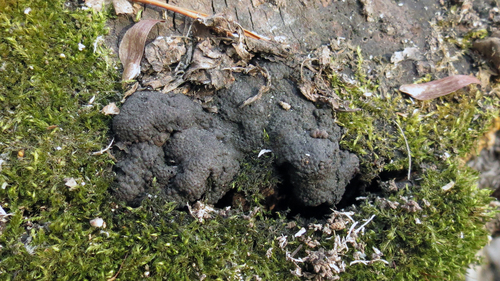
The fruiting bodies, or stromata, of Jackrogersella are typically cushion-shaped, rounded, or hemispherical, and often fuse together to form elongated, bumpy crusts ranging from 1 to 15 centimeters in length. Initially, they display a reddish-brown or dark coppery hue, which matures over time into a deep, coal-black color. The surface is distinctly pimpled or textured with tiny, raised dots, which are the openings of the spore-producing perithecia nestled just beneath the tough, carbonaceous crust.
カテゴリ
菌類レア度
Common
危険度
1/5 · 非常に低い
スナップ
最初にスナップしよう!
Despite looking like charcoal or burnt wood, these dark crusts are actually living fungal structures containing thousands of microscopic spore sacs.
The genus name Jackrogersella honors Jack D. Rogers, an eminent American mycologist who specialized in the study of Xylariaceae fungi.
These fungi can remain dormant during freezing winters or dry summers and resume sporulation once humidity levels rise again.
Produces specialized cellulase and ligninase enzymes to break down tough plant cell walls, transforming rigid wood into accessible organic nutrients.
Utilizes turgor pressure within its microscopic asci to forcibly eject mature spores into the air currents, maximizing dispersal potential.
The tough, carbonaceous exterior of the stroma protects the interior spore-producing tissues from drying out, allowing it to survive prolonged dry spells.
As a saprotrophic fungus, it obtains nutrients by decomposing dead woody plant tissue, primarily utilizing enzymatic processes to absorb sugars and carbon.
Betula pendula
Provides the dead wooden substrate upon which the fungus grows and decomposes.
Bolitophagus reticulatus
The tough fruiting bodies serve as food and breeding habitat for specialized mycophagous beetle larvae.
このオブジェクトにはまだ特徴バッジが割り当てられていません。
まだ別名はありません。
テーマが追加されると、このオブジェクトのコレクションがここに表示されます。
危険度
1/5 · 非常に低い
まだ特別な安全上の注意はありません。
Jackrogersellaを識別する最も簡単な方法は、Snappit自然識別アプリを使用することです。
1+ cm
0.001+ kg
1+ 年
As a saprotrophic fungus, it obtains nutrients by decomposing dead woody plant tissue, primarily utilizing enzymatic processes to absorb sugars and carbon.
Found in temperate deciduous and mixed forests, typically growing on dead, fallen branches or standing dead trunks of hardwood trees, particularly birch.
ズームインしてクラスターを分割し、このオブジェクトが撮影された場所を探索しましょう。
新しい観察が追加されると、ここに最近のスナップが表示されます。