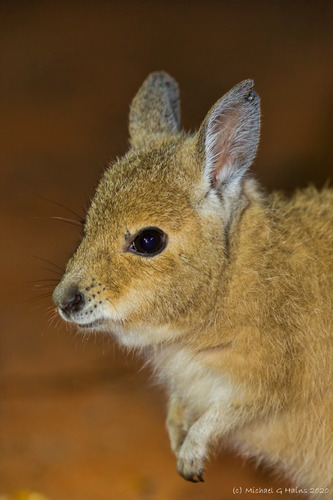


Kangaroos, Possums, Wombats, And Allies
diprotodontia
Diprotodontia is a massive, diverse order of marsupials that represents some of the most iconic wildlife of Australasia. From the muscular, bounding red kangaroos and heavy, burrowing wombats to the delicate, tree-dwelling sugar gliders and cuddly-looking koalas, this group has adapted to almost every terrestrial niche imaginable. Known collectively as diprotodonts, these incredible mammals are defined by two major shared features: diprotodonty (having only two large, forward-pointing lower incisors) and syndactyly (fused second and third toes of the hind feet, used for grooming). Their unique reproductive system, featuring a protective pouch where tiny, underdeveloped young finish their development, has fascinated biologists and nature lovers for centuries. Whether they are leaping across arid deserts, chewing eucalyptus leaves high in the forest canopy, or tunneling deep into subterranean burrows, diprotodonts are fundamental to the ecology and cultural identity of the regions they call home.
生息地: Typically found in a wide variety of habitats across Australia, New Guinea, and neighboring islands, ranging from dense eucalyptus forests and tropical rainforests to arid grasslands and subterranean burrow networks.
While diprotodonts vary wildly in size, they are linked by several key skeletal structures. All members feature two prominent, chisel-like lower incisors that project forward, and most possess a specialized syndactylous foot structure where the second and third toes are fused together up to the claws to serve as a built-in grooming comb. Sizes range from the tiny feathertail glider, measuring only a few centimeters, to the towering red kangaroo standing over 1.5 meters tall. Their body shapes match their lifestyles: kangaroos possess powerful, elongated hind legs and long, muscular tails for balance; wombats are stocky, barrel-shaped powerhouses; and possums and gliders exhibit slender bodies with prehensile tails or gliding membranes.
カテゴリ
哺乳類レア度
Common
危険度
1/5 · 非常に低い
スナップ
最初にスナップしよう!
Female diprotodonts can undergo 'embryonic diapause,' where they can pause the development of an embryo until an existing pouch young is ready to leave.
Red kangaroos can leap up to 9 meters (30 feet) in a single bound and reach heights of nearly 3 meters (10 feet).
The term 'diprotodontia' translates to 'two forward teeth' in Greek, referring to the characteristic pair of large, lower incisors shared by all members.
Wombats, which belong to this order, are famous for producing cube-shaped feces, which prevents the droppings from rolling off rocks and logs used to mark their territory.
The second and third toes on the hind feet are fused together in a single skin sheath, forming a highly effective double-clawed comb used to groom fur and remove parasites.
Many species, particularly kangaroos and wallabies, utilize highly elastic tendons in their hind legs that store and release energy like springs, enabling incredibly efficient long-distance hopping.
Females possess a specialized abdominal pouch (marsupium) that protects, nurtures, and transports their extremely underdeveloped newborn young as they grow.
The majority of diprotodonts are dedicated herbivores, consuming leaves, grasses, and bark, though some smaller species supplement this with insects, nectar, and sap.
年齢による違い: Infants feed exclusively on milk within their mother's pouch, slowly transitioning to their adult plant-based diet as they begin foraging outside.
Canis lupus dingo
Eaten by the Dingo, which is one of the primary mammalian predators of kangaroos, wallabies, and wombats across mainland Australia.
Eucalyptus viminalis
Feeds almost exclusively on the leaves of various Eucalyptus species, which provides both food and moisture.
Aquila audax
Preyed upon by the wedge-tailed eagle, particularly smaller species like possums and young wallaby joeys.
このオブジェクトにはまだ特徴バッジが割り当てられていません。
テーマが追加されると、このオブジェクトのコレクションがここに表示されます。
危険度
1/5 · 非常に低い
まだ特別な安全上の注意はありません。
Kangaroos, Possums, Wombats, And Alliesを識別する最も簡単な方法は、Snappit自然識別アプリを使用することです。
6-160 cm
0.005-90 kg
3-25 年
60 km/h
The majority of diprotodonts are dedicated herbivores, consuming leaves, grasses, and bark, though some smaller species supplement this with insects, nectar, and sap.
Typically found in a wide variety of habitats across Australia, New Guinea, and neighboring islands, ranging from dense eucalyptus forests and tropical rainforests to arid grasslands and subterranean burrow networks.
Grazing
ズームインしてクラスターを分割し、このオブジェクトが撮影された場所を探索しましょう。
新しい観察が追加されると、ここに最近のスナップが表示されます。














.jpg&width=800)