

Kiwi Bubbles
diatrype virescens
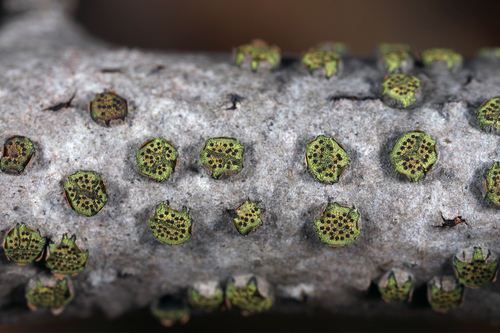
The Kiwi Bubbles fungus (Diatrype virescens) is a fascinating wood-decaying ascomycete that brings a splash of quirky color to the forest floor. Known for its bumpy, cushion-like fruiting bodies that resemble clusters of tiny green bubbles, this species plays a vital role in recycling nutrients within temperate woodland ecosystems. It is primarily found colonizing the dead branches of hardwood trees, with a strong preference for beech trees. Unlike fleshy mushrooms that rot quickly, Kiwi Bubbles produce a tough, persistent stroma that can endure harsh weather. Over time, these bubble-like structures erupt through the bark of fallen limbs, releasing thousands of microscopic spores into the air, offering nature lovers a wonderful glimpse into the hidden world of microscopic forest decomposers.
生息地: Found on decaying hardwood branches, especially fallen beech twigs and limbs, in moist temperate forests.
This fungus is characterized by small, raised, cushion-like bumps known as stromata, which measure roughly 2 to 6 millimeters in diameter and often fuse into larger crusts. They exhibit a distinctive greenish-yellow to olive-green coloration when fresh and moist, turning dark green, grey, or almost black as they dry out or age. The surface is textured with tiny, pimple-like dots which are the openings of the spore-producing chambers buried within the tough, carbon-like tissue.
カテゴリ
菌類レア度
Common
危険度
1/5 · 非常に低い
スナップ
最初にスナップしよう!
The common name 'Kiwi Bubbles' comes from its striking resemblance to tiny, fuzzy green kiwi fruits popping up from the bark.
The green coloration is due to unique secondary metabolites that may help deter certain herbivorous predators.
Unlike soft mushrooms, Kiwi Bubbles have a woody, charcoal-like interior that keeps them intact throughout the freezing winter.
Produces powerful extracellular enzymes that degrade lignin, allowing it to digest the toughest structural components of dead wood.
Utilizes internal turgor pressure to shoot microscopic spores directly out of its tiny surface pores into passing air currents.
Features a dense, carbonaceous stroma that locks in moisture, allowing the fungus to survive dry spells and resume sporulation when rain returns.
It is a saprotrophic decomposer that digests cellulose and complex lignin from decaying deciduous hardwood trees.
Fagus grandifolia
Serves as the primary substrate and source of nutrients for this saprotrophic fungus.
Mycetophila fungorum
Larvae of these insects burrow into and feed upon the fungal stromata.
このオブジェクトにはまだ特徴バッジが割り当てられていません。
まだ別名はありません。
テーマが追加されると、このオブジェクトのコレクションがここに表示されます。
危険度
1/5 · 非常に低い
まだ特別な安全上の注意はありません。
Kiwi Bubblesを識別する最も簡単な方法は、Snappit自然識別アプリを使用することです。
1-15 cm
1-3 年
It is a saprotrophic decomposer that digests cellulose and complex lignin from decaying deciduous hardwood trees.
Found on decaying hardwood branches, especially fallen beech twigs and limbs, in moist temperate forests.
ズームインしてクラスターを分割し、このオブジェクトが撮影された場所を探索しましょう。
新しい観察が追加されると、ここに最近のスナップが表示されます。