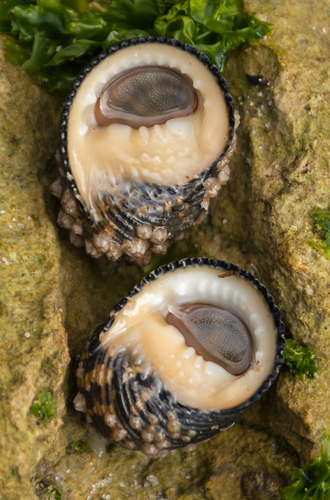


Lightning Nerite
nerita fulgurans
The Lightning Nerite (Nerita fulgurans) is a striking marine snail renowned for the electric, lightning-bolt patterns that adorn its shell. Found clinging tightly to the rocky intertidal zones and mangrove roots of the Western Atlantic and the Caribbean, this resilient gastropod is a master of survival in challenging coastal environments. Enduring the harsh fluctuations of tide and temperature, it plays a vital role in its ecosystem by grazing heavily on algae, keeping the shoreline clean. Its beautiful shell makes it a popular find for beachcombers, though it is most active at night or during high tide when it emerges from crevices to feed.
生息地: Primarily found inhabiting the rocky intertidal zones, coastal breakwaters, and mangrove root systems of tropical and subtropical coastlines.
This small, globose snail typically measures between 1 and 4 centimeters in diameter. Its robust, heavily ribbed shell features a dark brown to almost black background overlaid with contrasting white or yellowish zigzag stripes that resemble flashes of lightning. The aperture is a distinctive pale color, armed with small, pronounced teeth or denticles along the inner columellar lip, which help protect it from predators. It also possesses a thick, calcified operculum that it uses like a trapdoor to seal itself tightly inside its shell.
カテゴリ
Invertebrateレア度
Common
危険度
1/5 · 非常に低い
スナップ
最初にスナップしよう!
The name 'fulgurans' translates directly to 'lightning' in Latin, perfectly describing the electric zigzag patterns across the snail's dark shell.
Their shell lips have teeth-like structures called denticles, which effectively narrow the opening to keep out the prying claws of predatory crabs.
To survive the baking sun during low tide, the Lightning Nerite often huddles in tight groups to share moisture and reduce the surface area exposed to the air.
Unlike many marine snails that lay gelatinous egg masses, the Lightning Nerite lays distinct, tough, dome-shaped egg capsules on rocks or even on the shells of other snails.
It uses a heavily calcified operculum to seal its shell aperture, allowing it to survive long periods of low tide without drying out in the baking sun.
Equipped with a specialized radula containing rows of microscopic, hardened teeth perfectly adapted for scraping tough biofilms and microalgae off solid rock.
Often exhibits homing tendencies, returning to the exact same rock crevice or scar after nocturnal foraging trips to rest securely and avoid predators.
The Lightning Nerite is a grazing herbivore that feeds primarily on microalgae, diatoms, and cyanobacteria found coating rocks and mangrove roots.
Menippe mercenaria
Stone crabs crush and consume nerite snails in rocky intertidal habitats.
Ulva lactuca
Lightning Nerites scrape filamentous green algae and biofilms from rocky substrates.
Clibanarius vittatus
Hermit crabs heavily rely on empty Nerita fulgurans shells for protective housing once the snail dies.
このオブジェクトにはまだ特徴バッジが割り当てられていません。
まだ別名はありません。
テーマが追加されると、このオブジェクトのコレクションがここに表示されます。
危険度
1/5 · 非常に低い
まだ特別な安全上の注意はありません。
Lightning Neriteを識別する最も簡単な方法は、Snappit自然識別アプリを使用することです。
1-4 cm
0.005-0.02 kg
2-5 年
The Lightning Nerite is a grazing herbivore that feeds primarily on microalgae, diatoms, and cyanobacteria found coating rocks and mangrove roots.
Primarily found inhabiting the rocky intertidal zones, coastal breakwaters, and mangrove root systems of tropical and subtropical coastlines.
Grazing
50-200
ズームインしてクラスターを分割し、このオブジェクトが撮影された場所を探索しましょう。
新しい観察が追加されると、ここに最近のスナップが表示されます。






.jpeg&width=800)







