

Microcystis Aeruginosa
microcystis aeruginosa
Microcystis aeruginosa is a ubiquitous freshwater cyanobacterium, often notorious for its ability to form extensive and harmful algal blooms (HABs) in nutrient-rich aquatic environments. While individually microscopic, these bacteria aggregate into visible colonies, creating green or blue-green scums on the water surface. These blooms are not merely unsightly; they can produce potent toxins called microcystins, which pose significant health risks to humans, livestock, and wildlife, and can severely impact aquatic ecosystems by depleting oxygen and blocking sunlight. Understanding Microcystis aeruginosa is crucial for managing water quality and mitigating the environmental and public health consequences of eutrophication.
生息地: This cyanobacterium is typically found in eutrophic (nutrient-rich), warm, and relatively still freshwater bodies such as lakes, ponds, reservoirs, and slow-moving rivers.
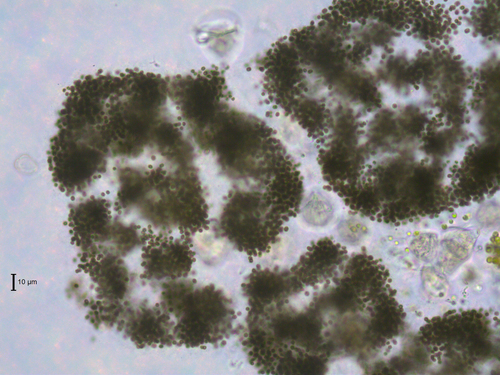
Microcystis aeruginosa colonies appear as macroscopic aggregations, ranging from small, granular dots to large, irregularly shaped clumps or extensive surface mats. These colonies are typically green or blue-green, sometimes appearing greenish-brown, and have a gelatinous or scummy texture that floats on the water. Individual cells are spherical to ovoid, measuring 3-8 micrometers in diameter, and are densely packed within a mucilaginous sheath, contributing to the colony's buoyant, often turbid appearance.
カテゴリ
Animalレア度
Common
危険度
1/5 · 非常に低い
スナップ
最初にスナップしよう!
Microcystis aeruginosa is one of the most common causes of harmful algal blooms (HABs) in freshwater bodies worldwide.
Microcystis blooms often contribute to oxygen depletion (hypoxia) in water bodies when the large masses of bacteria die and decompose, harming fish and other aquatic life.
The toxins produced by Microcystis, called microcystins, are potent hepatotoxins that can cause severe liver damage in animals and humans.
These cyanobacteria can control their buoyancy using gas vesicles, allowing them to move vertically in the water column to optimize light exposure and nutrient uptake.
Microcystis aeruginosa possesses gas vacuoles that allow it to regulate its position in the water column, moving up to the surface for optimal sunlight or down to access nutrients.
It produces potent hepatotoxins called microcystins, which are harmful to the liver and can be toxic to humans and animals upon ingestion or exposure.
Individual cells aggregate into large colonies enclosed in a mucilage, providing protection against grazing, UV radiation, and allowing for efficient nutrient acquisition.
Microcystis aeruginosa is a photoautotroph, producing its own food through photosynthesis by converting sunlight, carbon dioxide, and inorganic nutrients into energy and organic matter.
Daphnia magna
Certain species of zooplankton, though some may avoid it due to toxins.
N/A
Excess nutrients in water bodies leading to bloom formation.
Homo sapiens
Humans are impacted by toxins in drinking water or recreational exposure.
N/A
Competes for light and nutrients, especially in dense blooms, impacting their growth.
このオブジェクトにはまだ特徴バッジが割り当てられていません。
まだ別名はありません。
テーマが追加されると、このオブジェクトのコレクションがここに表示されます。
危険度
1/5 · 非常に低い
まだ特別な安全上の注意はありません。
Microcystis Aeruginosaを識別する最も簡単な方法は、Snappit自然識別アプリを使用することです。
0 cm
Microcystis aeruginosa is a photoautotroph, producing its own food through photosynthesis by converting sunlight, carbon dioxide, and inorganic nutrients into energy and organic matter.
This cyanobacterium is typically found in eutrophic (nutrient-rich), warm, and relatively still freshwater bodies such as lakes, ponds, reservoirs, and slow-moving rivers.
Photosynthesis, Nutrient Uptake
ズームインしてクラスターを分割し、このオブジェクトが撮影された場所を探索しましょう。
新しい観察が追加されると、ここに最近のスナップが表示されます。



