

Mojave Woodyaster
xylorhiza tortifolia
The Mojave Woodyaster is a ruggedly beautiful perennial subshrub native to the arid desert regions of the southwestern United States and northwestern Mexico. Belonging to the sunflower family, this resilient plant is celebrated for its striking lavender-blue blossoms that contrast vividly against dry desert backdrops. It typically grows in clumps, woody at the base, sending up numerous leafy stems that end in single, large daisy-like flowers. This hardy species has adapted remarkably well to the harsh climates of the Mojave and Sonoran deserts, utilizing a deep taproot to capture scarce water. During the hot, dry summer months, it often enters a state of dormancy, only to spring back to life with the winter rains and dazzle observers with its late spring bloom. It serves as an important early-season nectar source for native desert pollinators.
生息地: Found on dry, rocky slopes, canyon walls, and sandy washes within creosote bush scrub and pinyon-juniper woodland environments.
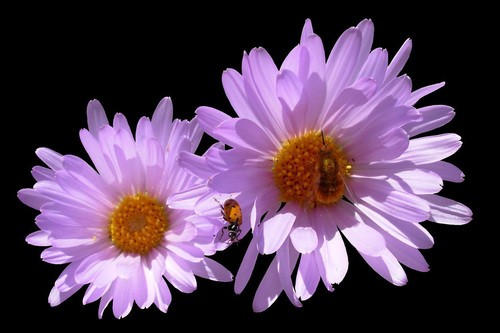
This plant forms rounded clumps up to 80 cm tall. The stems are light green to greyish, arising from a tough, woody base. The leaves are lance-shaped, grey-green, and prominently feature sharp, spiny-toothed margins. Each stem produces a single large flower head, approximately 5 to 6 cm wide, boasting 30 to 60 delicate, narrow ray petals ranging in color from pale lavender to deep violet-blue. These circle a bright, golden-yellow central disc of tubular florets, creating a classic daisy-like appearance.
カテゴリ
植物レア度
Common
危険度
1/5 · 非常に低い
スナップ
最初にスナップしよう!
Despite its delicate daisy-like appearance, this plant is incredibly tough, with a woody base that can survive extreme desert temperatures exceeding 45 degrees Celsius.
It belongs to a specialized genus, Xylorhiza, whose name is derived from Greek words meaning 'woody root'.
The species name 'tortifolia' translates to 'twisted leaves', referencing the slight twist often observed in its spiny-edged foliage.
The plant can drop its leaves and enter a semi-dormant state during the hottest, driest parts of summer to conserve water.
It is capable of absorbing and tolerating high concentrations of selenium from desert soils, making its foliage toxic and unpalatable to many herbivores.
A tough, woody base protects the plant's core and root crown from extreme soil temperatures and physical damage.
As a photoautotrophic plant, the Mojave Woodyaster produces its own food by converting sunlight, carbon dioxide, and water into sugars through photosynthesis.
Gopherus agassizii
Feeds on the leaves and stems of the plant as part of its desert diet.
Apis mellifera
Visits the vibrant flower heads to gather nectar and pollen, acting as a key pollinator.
Larrea tridentata
Competes for limited soil moisture and sunlight in dry desert scrub habitats.
このオブジェクトにはまだ特徴バッジが割り当てられていません。
まだ別名はありません。
テーマが追加されると、このオブジェクトのコレクションがここに表示されます。
危険度
1/5 · 非常に低い
まだ特別な安全上の注意はありません。
Mojave Woodyasterを識別する最も簡単な方法は、Snappit自然識別アプリを使用することです。
20-80 cm
5-15 年
As a photoautotrophic plant, the Mojave Woodyaster produces its own food by converting sunlight, carbon dioxide, and water into sugars through photosynthesis.
Found on dry, rocky slopes, canyon walls, and sandy washes within creosote bush scrub and pinyon-juniper woodland environments.
Photosynthesis
ズームインしてクラスターを分割し、このオブジェクトが撮影された場所を探索しましょう。
新しい観察が追加されると、ここに最近のスナップが表示されます。