






Osage-orange
Maclura pomifera
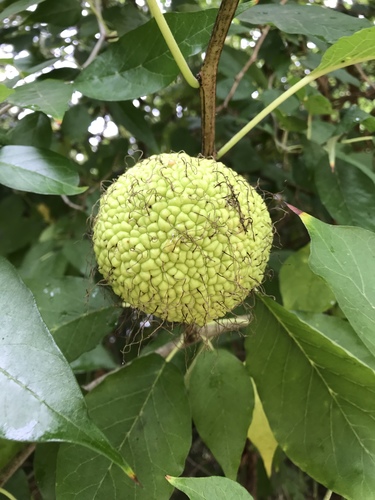
The Osage-orange tree is known for its bright green, bumpy fruit that looks like a big orange! It has strong wood and beautiful leaves that turn yellow in the fall.
生息地: Grasslands
The Osage-orange tree has glossy, oval leaves and sharp thorns along its branches. Its bark is deeply furrowed and turns an orange-brown with age. Most distinctively, it produces large, bumpy, citrus-green fruits that resemble brains.
カテゴリ
植物レア度
Common
危険度
1/5 · 非常に低い
スナップ
最初にスナップしよう!
Its wood is one of the densest in North America, even denser than oak!
People once planted these thorny trees as 'living fences' to keep livestock in.
The bright orange heartwood of this tree glows under a blacklight!
You can extract a vibrant yellow dye from the tree's bark and roots!
Osage-orange has sharp thorns that help it defend its branches from grazing animals.
Osage-orange produces incredibly dense and durable wood that resists decay, making it last a long time.
Its huge, hard fruits evolved to be spread by large, now-extinct megafauna like mammoths.
Odocoileus virginianus
browses young leaves and twigs
Cardinalis cardinalis
builds nests in its thorny branches

Thomomys bottae
gnaws on its roots underground
落葉植物は定期的に、主に秋や乾季にすべての葉を落とします。
耐陰性植物は、光量が少ない環境でも成長して繁茂できるよう適応しており、直射日光をあまり必要としません。
広葉樹は被子植物であり、平たく広い葉を特徴とし、温帯気候では通常毎年落葉します。
果実をつける植物は、種子を含む顕花植物の成熟した子房である果実を作ります。

木材とは、建築や大工仕事で使うために加工された木のことです。

紅葉は、主に落葉植物に見られる季節的な葉の色の変化を指し、鮮やかな色合いを見せます。

草原の生息地は、草や草本植物が優占する陸上バイオームであり、多様な草食動物を支えています。

その存在と役割が環境に対して極めて大きな影響を与える種を指します。
危険度
1/5 · 非常に低い
Don't eat the fruit, as it's not safe for people.
600-1800 cm
600-1200 cm
0.3-0.5 cm
Late spring to early summer
いいえ
軽度
多年生
風
ズームインしてクラスターを分割し、このオブジェクトが撮影された場所を探索しましょう。
新しい観察が追加されると、ここに最近のスナップが表示されます。










_Epilobium_ciliatum_-_flowers.jpg&width=800)





