

Outis Skipper
cogia outis
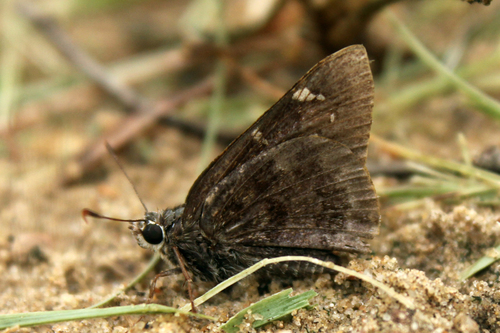
The Outis Skipper (Cogia outis) is a subtle yet fascinating member of the skipper butterfly family, Hesperiidae. Found predominantly in the arid scrublands and rocky glades of the south-central United States and northern Mexico, this small lepidopteran blends beautifully with its rugged surroundings. It is known for its quick, darting flight pattern, a characteristic feature of skippers that makes them both a delight and a challenge for nature enthusiasts to spot. While easily overlooked due to its dusty brown coloration, closer inspection reveals a complex tapestry of earthy patterns. This resilient insect plays a quiet but vital role in its local ecosystem, acting as a pollinator for various wild flowers and serving as a food source for local insectivores.
生息地: Typically found in dry, rocky limestone hillsides, oak scrublands, and open chaparral brush where its host plants thrive.
The Outis Skipper is a medium-sized skipper with a wingspan of approximately 3.2 to 4.1 centimeters. Its dorsal wing surfaces are primarily a dark, warm brown, accented by a series of small, semi-transparent white spots scattered near the tips of the forewings. The underside of the hindwing displays a distinctive grizzled grayish-brown coloration, marked with subtle dark brown bands and a faint purplish sheen when caught in direct light. Unlike some related skipper species, the Outis Skipper lacks prominent tails and features the characteristic robust, moth-like body of its family, complete with large eyes and widely spaced, hooked antennae.
カテゴリ
昆虫レア度
Common
危険度
1/5 · 非常に低い
スナップ
最初にスナップしよう!
Caterpillars build protective sleeping bags by rolling up leaves and gluing them shut with silk, only emerging to feed.
Like many skippers, they have a specialized hook at the end of their antennae called an apiculus, which helps distinguish them from typical butterflies.
Their quick, darting flight style is so erratic that it can momentarily confuse the vision of pursuing birds, giving them a quick getaway.
Utilizes powerful thoracic muscles to achieve incredibly fast, erratic flight patterns that easily evade avian predators.
The larval caterpillars construct silk-tied leaf nests on host plants to protect themselves from harsh sun and predators.
They position their wings at precise angles relative to the sun to rapidly raise their body temperature on cool mornings.
Adults drink nectar from a variety of flowering plants, while the caterpillars feed strictly on the foliage of woody legumes.
年齢による違い: Larvae are herbivorous leaf-chewers restricted to specific host plants, whereas adults are generalist nectar-feeders.
Mimosa borealis
Provides larval food; the caterpillar constructs its shelter on and eats the leaves of this host plant.
Cephalanthus occidentalis
Adults feed on the nectar of this flower, contributing to its pollination.
Peucetia viridans
Preys on the adult butterflies as they forage on flowers.
このオブジェクトにはまだ特徴バッジが割り当てられていません。
まだ別名はありません。
テーマが追加されると、このオブジェクトのコレクションがここに表示されます。
危険度
1/5 · 非常に低い
まだ特別な安全上の注意はありません。
Outis Skipperを識別する最も簡単な方法は、Snappit自然識別アプリを使用することです。
1-2 cm
3-4 cm
0.0001-0.0003 kg
0-1 年
15 km/h
Adults drink nectar from a variety of flowering plants, while the caterpillars feed strictly on the foliage of woody legumes.
Typically found in dry, rocky limestone hillsides, oak scrublands, and open chaparral brush where its host plants thrive.
ズームインしてクラスターを分割し、このオブジェクトが撮影された場所を探索しましょう。
新しい観察が追加されると、ここに最近のスナップが表示されます。