

Oysterplant
mertensia maritima
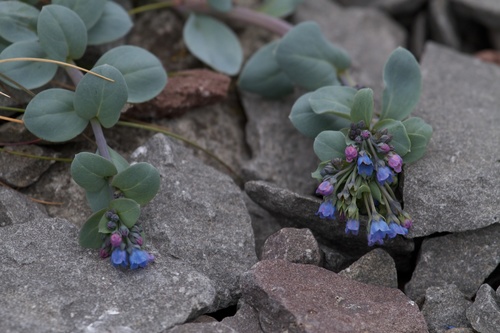
The Oysterplant (Mertensia maritima) is a hardy, low-growing perennial herb famous for its culinary quirk: its fleshy leaves taste remarkably like fresh oysters. Found clinging to the gravelly and pebbly shorelines of the subarctic and northern temperate regions, this plant is a resilient survivor. It forms beautiful, sprawling mats of blue-green, waxy foliage that stand out starkly against bleak coastal landscapes. During the summer, it produces delicate bell-shaped flowers that transition from pink to a vivid sky blue, attracting various coastal pollinators. This coastal beauty is highly adapted to salty, wind-swept maritime environments, making it a true marvel of northern coastlines.
生息地: Found on gravelly, shingly, or sandy coastal shorelines, just above the high tide mark in subarctic and temperate northern regions.
The Oysterplant is characterized by its prostrate, sprawling growth habit, forming low mats up to 10 to 15 cm tall and spreading up to 60 cm wide. Its leaves are thick, fleshy, ovate, and covered with a glaucous, powdery blue-grey wax layer that helps retain moisture and protect against salt spray. The flowers are small, bell-shaped, and arranged in terminal cymes; they open as pink buds and mature into a brilliant azure or sky-blue color. After flowering, it produces small, nutlet-like fruits.
カテゴリ
植物レア度
Common
危険度
1/5 · 非常に低い
スナップ
最初にスナップしよう!
Its scientific genus name, Mertensia, honors the German botanist Franz Carl Mertens.
The leaves taste almost identical to oysters, making them a highly sought-after gourmet ingredient for vegan oyster substitutes.
The seeds can float on seawater for long periods without losing viability, helping the plant colonize new remote shorelines.
Leaves are covered with a thick, powdery wax that prevents water loss and protects tissues from abrasive salt spray and UV rays.
Its succulent, fleshy leaves are adapted to store water in highly saline coastal environments where freshwater is scarce.
Seeds are exceptionally cold-hardy, allowing them to survive harsh subarctic winters and germinate during the brief northern summer.
As a photosynthetic plant, the Oysterplant generates its own energy from sunlight, carbon dioxide, and water, supplemented by minerals from coastal soils.
Bombus polaris
Visits the flowers for nectar, facilitating pollination in cold northern environments.
Ovis aries
Graze on the succulent foliage in coastal pasture areas.
Honckenya peploides
Competes for space and nutrients on sandy and gravelly beaches.
このオブジェクトにはまだ特徴バッジが割り当てられていません。
まだ別名はありません。
テーマが追加されると、このオブジェクトのコレクションがここに表示されます。
危険度
1/5 · 非常に低い
まだ特別な安全上の注意はありません。
Oysterplantを識別する最も簡単な方法は、Snappit自然識別アプリを使用することです。
10-60 cm
0.05-0.5 kg
3-10 年
As a photosynthetic plant, the Oysterplant generates its own energy from sunlight, carbon dioxide, and water, supplemented by minerals from coastal soils.
Found on gravelly, shingly, or sandy coastal shorelines, just above the high tide mark in subarctic and temperate northern regions.
Photosynthesis
ズームインしてクラスターを分割し、このオブジェクトが撮影された場所を探索しましょう。
新しい観察が追加されると、ここに最近のスナップが表示されます。








_Malva_parviflora_-_Habitus.jpg&width=800)