
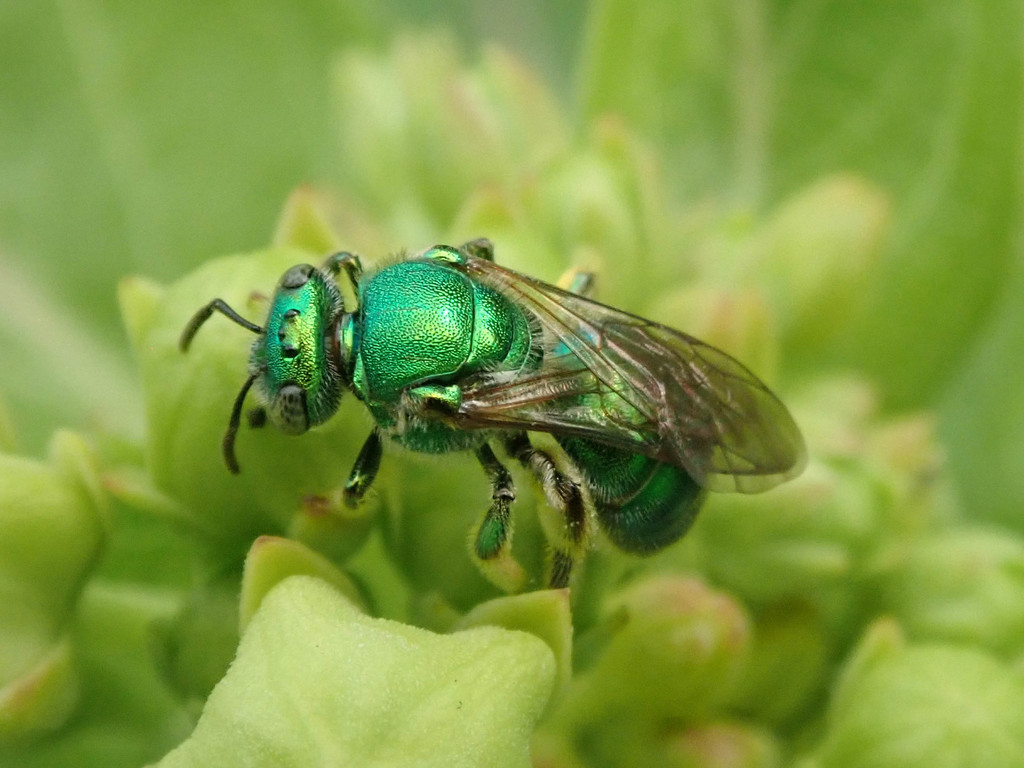





Paraugochloropsis
Paraugochloropsis
Paraugochloropsis is a colorful insect that loves to hide among the leaves. It has bright colors that help it blend in with flowers and plants, making it a fun little friend to spot in nature!
生息地: Forests
The Paraugochloropsis is a small, often brilliantly metallic green or coppery bee with clear, delicate wings. Its shimmering body makes it stand out like a tiny jewel among garden flowers, often with dark legs and antennae.
カテゴリ
昆虫レア度
Common
危険度
1/5 · 非常に低い
スナップ
最初にスナップしよう!
Did you know some "sweat bees" get their name because they occasionally land on people to lick up sweat?
Paraugochloropsis larvae grow up eating a special "bee bread" made by their mothers from pollen and nectar!
Their amazing metallic bodies aren't paint, but special light-bending structures in their exoskeleton!
These tiny bees are super important pollinators for many wild flowers and even some farm crops!
Paraugochloropsis can carry tiny grains of pollen on their fuzzy legs, which helps new plants grow fruits and seeds.
Paraugochloropsis has strong mandibles and legs for digging, which helps them tunnel underground to build safe nests for their babies.
Paraugochloropsis can navigate using the sun's position, which helps them find their way back to their hidden nest after foraging far away.
They primarily feed on nectar for energy and pollen for protein, collected from various flowering plants.
Helianthus annuus
helps this flower produce seeds
Misumena vatia
hides on flowers to ambush bees
Mantis religiosa
a stealthy predator that catches bees
Sphecodes rufiventris
lays eggs in their nests to steal food
単独行動をとる動物は、繁殖や子育ての時を除き、生涯のほとんどを1匹で生活します。
周囲の環境に溶け込むような色や模様を持つ生物の特徴を指します。
カラフルとは、生物や物体が明るくはっきりとした多様な色合いを見せることを指します。
多種多様な花粉媒介者(ポリネーター)にとって特に魅力的で有益な植物を表します。

食事のすべて、または大部分が植物で構成されている生物が持つ特徴です。

森林の生息地は木々が密集して生い茂る陸上環境であり、多種多様な動植物の命を支えています。

昼行性の動物は主に日中に活動し、通常は夜間に休息や睡眠をとります。

花粉を運び、植物の受粉と繁殖を助ける生物のことを指します。
まだ別名はありません。
危険度
1/5 · 非常に低い
Always watch where you step in nature to avoid stepping on tiny insects like this one.
8-20 mm
4-10 mm
30-90 日
12 km/h
They primarily feed on nectar for energy and pollen for protein, collected from various flowering plants.
Forests
Foraging
6
ズームインしてクラスターを分割し、このオブジェクトが撮影された場所を探索しましょう。
新しい観察が追加されると、ここに最近のスナップが表示されます。














