

Parry'S Agave
agave parryi
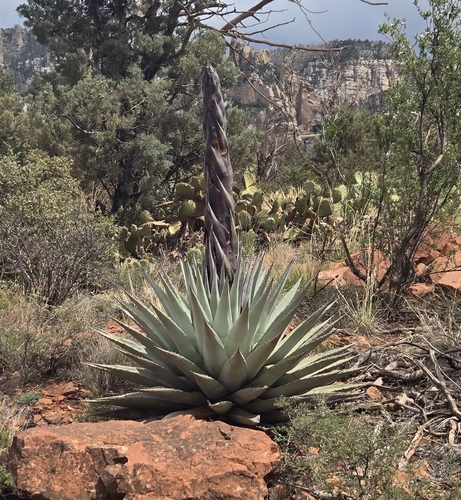
Parry'S Agave (Agave parryi), also known as the mescal agave, is a stunning, slow-growing succulent native to the arid mountainous regions of the southwestern United States and northern Mexico. Known for its exceptionally symmetrical, artichoke-like rosette form, this hardy plant has adapted to survive extreme environmental conditions, enduring both sub-zero winter temperatures and scorching summer heat. It stores moisture in its thick, fleshy leaves to withstand prolonged droughts, making it a true survivor of the American deserts. For centuries, indigenous peoples like the Apache harvested and roasted the hearts of this plant as a vital source of nutrition and fiber.
生息地: Typically found in dry, rocky soils, slopes, grassy plains, and chaparral areas within oak and pine-juniper woodlands at high elevations.
This succulent forms a tight, globe-shaped rosette of broad, spoon-shaped leaves that range in color from pale blue-gray to light green, measuring up to 60 centimeters in height and width. Each leaf is armed with dark brown or black margins lined with small teeth, terminating in a sharp, prominent spine that can reach 3 centimeters in length. At the end of its life, it produces a spectacular, towering flower spike that can rise 4.5 meters high, displaying clusters of bright yellow flowers emerging from reddish-orange buds.
カテゴリ
植物レア度
Common
危険度
1/5 · 非常に低い
スナップ
最初にスナップしよう!
Despite being nicknamed the 'Century Plant,' it usually lives between 10 to 30 years rather than a full hundred years.
Indigenous Apache groups historically roasted the plant's central core in underground stone pits for up to two days to produce a sweet food that tasted like molasses.
It is a monocarpic plant, meaning it flowers only once at the very end of its long life, using up all its energy reserves to produce seeds before dying.
Opens its stomata only at night to absorb carbon dioxide, dramatically reducing water loss from evaporation during hot desert days.
Utilizes highly specialized internal parenchyma tissue in its thick leaves to store large reservoirs of water during rainy seasons.
Produces genetic clones or offsets called pups around its base, ensuring the survival of the organism even after the main rosette dies.
Synthesizes its own food using sunlight, carbon dioxide, and water through photosynthesis, supplemented by essential nutrients absorbed by its roots.
Leptonycteris nivalis
Pollinates the nocturnal yellow flowers, drinking rich nectar in exchange for transferring pollen.
Scyphophorus acupunctatus
Burrows into the heart of the agave to lay eggs, with larvae feeding on and ultimately rotting the plant.
Apis mellifera
Visits the high-energy nectar of the daytime blooms to forage for pollen and nectar.
このオブジェクトにはまだ特徴バッジが割り当てられていません。
まだ別名はありません。
テーマが追加されると、このオブジェクトのコレクションがここに表示されます。
危険度
1/5 · 非常に低い
まだ特別な安全上の注意はありません。
Parry'S Agaveを識別する最も簡単な方法は、Snappit自然識別アプリを使用することです。
30-60 cm
5-20 kg
10-30 年
Synthesizes its own food using sunlight, carbon dioxide, and water through photosynthesis, supplemented by essential nutrients absorbed by its roots.
Typically found in dry, rocky soils, slopes, grassy plains, and chaparral areas within oak and pine-juniper woodlands at high elevations.
ズームインしてクラスターを分割し、このオブジェクトが撮影された場所を探索しましょう。
新しい観察が追加されると、ここに最近のスナップが表示されます。




.jpg&width=800)








