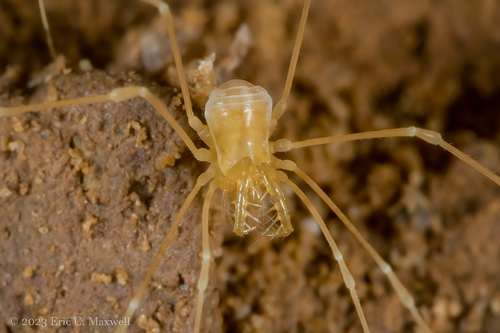


Phalangodes Armata
phalangodes armata
The Phalangodes armata, also known simply as a cave harvestman, is a fascinating and highly specialized arachnid adapted to life in the perpetual darkness of subterranean ecosystems. Found primarily within the limestone cave systems of the southeastern United States, this delicate creature showcases the incredible power of evolutionary adaptation. Unlike their surface-dwelling cousins, these harvestmen have traded keen eyesight for highly developed tactile and chemical senses to navigate their rugged, pitch-black homes. Observing Phalangodes armata is a treat for any spelunker or subterranean enthusiast. These arachnids play a vital role in cave ecology, acting as both predators of micro-invertebrates and scavengers of organic detritus. Their presence is a key indicator of a healthy, functioning cave ecosystem, highlighting the delicate balance of life underground.
生息地: Typically found in the dark zones of limestone caves, clinging to damp walls, ceilings, or under decaying organic matter.
This tiny arachnid has a compact, oval body measuring only 1.5 to 3 millimeters in length, with a pale yellowish, amber, or translucent coloration that lacks protective dark pigmentation. It features extremely long, thread-like legs, with the second pair being noticeably elongated to serve as sensory antennae. Its pedipalps are heavily armed with sharp, conspicuous spines used to grasp prey, and its eyes are greatly reduced, appearing as small, non-functional dark spots on its head.
カテゴリ
Invertebrateレア度
Common
危険度
1/5 · 非常に低い
スナップ
最初にスナップしよう!
It has highly reduced eyes due to its evolutionary adaptation to life in dark cave systems, relying almost entirely on tactile and chemical senses.
Its second pair of legs is twice as long as its body and acts almost exactly like an insect's antennae.
Unlike true spiders, Phalangodes armata does not produce silk or spin webs, relying instead on active crawling and foraging.
Uses its extremely long second pair of legs as tactile and chemical sensors to navigate and locate prey in complete darkness.
Possesses an incredibly slow metabolic rate, allowing it to survive for long periods in food-scarce cave environments.
Emits a pungent chemical secretion from defensive scent glands to deter potential cave predators.
Feeds opportunistically on small cave-dwelling invertebrates, fungal spores, and organic debris found in subterranean ecosystems.
Neaphaenops tellkampfii
Competes for small prey like springtails in deep cave chambers.
Pseudotriton ruber
Preys on cave harvestmen wandering near cave entrances or twilight zones.
Sinella cavernarum
Serves as a primary prey item for the cave harvestman.
このオブジェクトにはまだ特徴バッジが割り当てられていません。
まだ別名はありません。
テーマが追加されると、このオブジェクトのコレクションがここに表示されます。
危険度
1/5 · 非常に低い
まだ特別な安全上の注意はありません。
Phalangodes Armataを識別する最も簡単な方法は、Snappit自然識別アプリを使用することです。
0 cm
0.00001-0.00005 kg
1-3 年
Feeds opportunistically on small cave-dwelling invertebrates, fungal spores, and organic debris found in subterranean ecosystems.
Typically found in the dark zones of limestone caves, clinging to damp walls, ceilings, or under decaying organic matter.
Foraging
10-40
ズームインしてクラスターを分割し、このオブジェクトが撮影された場所を探索しましょう。
新しい観察が追加されると、ここに最近のスナップが表示されます。

















