

Pumpkin Ash
fraxinus profunda
The Pumpkin Ash (Fraxinus profunda) is a majestic deciduous tree native to the wet bottomlands, swamps, and floodplains of eastern North America. Named for the unique, swollen, pumpkin-like shape of its trunk base when growing in standing water, this impressive tree plays a vital role in wetland ecosystems. It can reach heights of up to 30 meters, standing tall above soggy soils where other tree species struggle to survive. Its presence provides crucial canopy shade, nesting habitat, and food for a variety of wetland wildlife. Sadly, like many North American ashes, the Pumpkin Ash is facing a severe threat from the invasive Emerald Ash Borer beetle, making wild encounters with healthy mature specimens increasingly rare and valuable for conservation efforts.
生息地: Found in deeply flooded swamps, wet bottomlands, floodplains, and river basins across eastern and central North America.
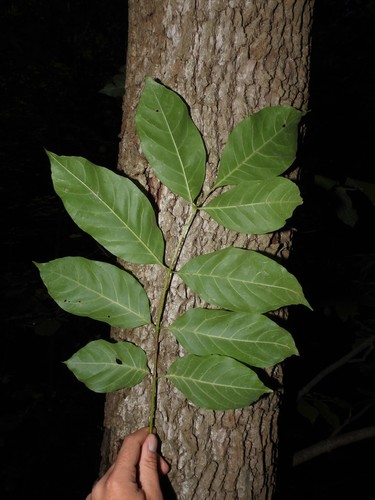
This large tree is best identified by its distinctive buttressed or swollen lower trunk, which resembles a pumpkin when submerged in swampy environments. Its bark is thick, gray-brown, and deeply furrowed into a diamond-shaped pattern. The compound leaves are oppositely arranged, typically featuring 7 to 9 large, velvety leaflets with finely toothed or smooth margins and fuzzy undersides. In autumn, these leaves turn warm shades of bronze and yellow. During late summer, female trees produce large, drooping clusters of winged seeds called samaras, which are notably larger and wider than those of other ash species.
カテゴリ
植物レア度
Common
危険度
1/5 · 非常に低い
スナップ
最初にスナップしよう!
Its leaves feature exceptionally hairy stalks and undersides compared to other ash species, helping to reduce water loss.
Its seeds (samaras) are the largest of any ash species in North America, perfectly adapted for aquatic travel.
Pumpkin Ash wood is lightweight yet surprisingly strong, historically used for making oars, tool handles, and crates.
The characteristic 'pumpkin' swelling at the base of the tree only develops when it grows in areas that are continuously flooded.
The swollen, flare-like base of the trunk provides vital physical stability in loose, waterlogged, and muddy swamp soils.
It features specialized physiological adaptations that allow its roots to survive and function in low-oxygen, water-saturated conditions.
Its large, winged samaras are designed to float on water, utilizing seasonal flood currents to colonize new wetland areas.
As a photoautotroph, the Pumpkin Ash produces its own organic compounds using sunlight, water, carbon dioxide, and essential soil nutrients.
Agrilus planipennis
The highly destructive invasive beetle larvae burrow through the inner bark, disrupting nutrient flow and killing the tree.
Papilio glaucus
The caterpillars of this beautiful butterfly feed on the leaves of the Pumpkin Ash as a primary host plant.
Aix sponsa
Wood ducks feed heavily on the large, buoyant seeds (samaras) that fall into the swamp water.
このオブジェクトにはまだ特徴バッジが割り当てられていません。
まだ別名はありません。
テーマが追加されると、このオブジェクトのコレクションがここに表示されます。
危険度
1/5 · 非常に低い
まだ特別な安全上の注意はありません。
Pumpkin Ashを識別する最も簡単な方法は、Snappit自然識別アプリを使用することです。
1500-3000 cm
80-150 年
As a photoautotroph, the Pumpkin Ash produces its own organic compounds using sunlight, water, carbon dioxide, and essential soil nutrients.
Found in deeply flooded swamps, wet bottomlands, floodplains, and river basins across eastern and central North America.
Photosynthesis
ズームインしてクラスターを分割し、このオブジェクトが撮影された場所を探索しましょう。
新しい観察が追加されると、ここに最近のスナップが表示されます。














