

Pyrenean Thistle
carduus carlinoides
The Pyrenean Thistle (Carduus carlinoides) is a resilient, low-growing perennial plant native to the high-altitude rocky screes and alpine grasslands of the Pyrenees and northwestern Spain. Clinging to challenging terrain where few other species can survive, this hardy thistle plays a critical role in stabilizing loose alpine soils and providing vital nourishment to high-altitude pollinators. Its distinctive look, featuring a rosette of deeply cut, spiny leaves and clusters of bright purple-pink flower heads, makes it a striking sight for hikers brave enough to explore the high peaks. Despite its formidable prickly defense, it is a key component of the fragile alpine ecosystem, perfectly adapted to withstand intense winds, cold temperatures, and strong ultraviolet radiation typical of its mountain home.
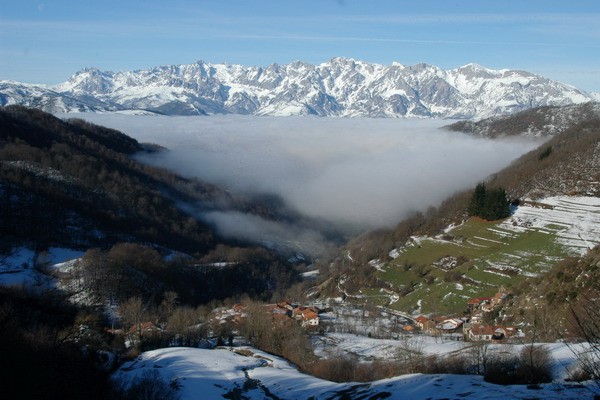
生息地: Found in high-altitude alpine grasslands, rocky screes, and gravelly slopes of the Pyrenees, typically at elevations between 1,500 and 3,000 meters.
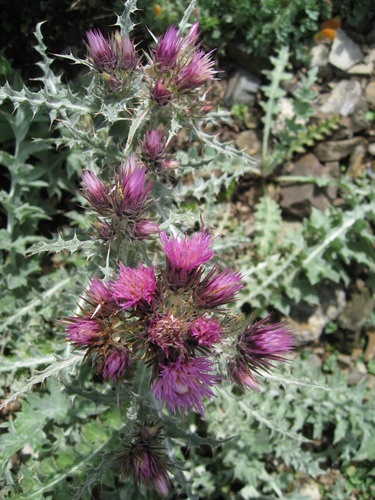
This low-lying herbaceous perennial typically grows to a height of 10 to 40 cm. It features a basal rosette of highly dissected, grayish-green leaves adorned with sharp, yellow-tipped spines and covered in a fine web-like down. The flowers are clustered at the ends of short, cobwebby stems, presenting as compact, fluffy heads of vibrant pinkish-purple florets surrounded by spiny, purplish bracts.
カテゴリ
植物レア度
Common
危険度
1/5 · 非常に低い
スナップ
最初にスナップしよう!
Despite its prickly appearance, the Pyrenean Thistle belongs to the Asteraceae family, making it a close relative of sunflowers and daisies.
Its dense web of woolly hairs acts like a natural greenhouse, trapping a layer of warm air close to the plant's surface to survive freezing mountain nights.
The species name 'carlinoides' references its resemblance to the Carline Thistle (genus Carlina), another alpine plant group.
The plant's stems and leaves are covered in dense, white woolly hairs that trap heat, reduce water loss, and protect tissues from intense high-altitude UV radiation.
Sharp, rigid spines line the margins of its deeply lobed leaves, deterring grazing alpine herbivores like chamois and marmots.
A strong taproot system allows the thistle to anchor securely in loose, shifting rocky screes and access deep water reserves during dry alpine summers.
As a photoautotrophic plant, the Pyrenean Thistle produces its own energy through photosynthesis, utilizing sunlight, carbon dioxide, and water while absorbing minerals from mountain soils.
Bombus alpinus
Pollinates the thistle flowers while feeding on nectar and pollen in high-altitude environments.
Rupicapra pyrenaica
Occasionally grazes on the plant, despite its protective sharp spines.
Vanessa cardui
Lays eggs on the leaves, which serve as food for the caterpillars.
このオブジェクトにはまだ特徴バッジが割り当てられていません。
まだ別名はありません。
テーマが追加されると、このオブジェクトのコレクションがここに表示されます。
危険度
1/5 · 非常に低い
まだ特別な安全上の注意はありません。
Pyrenean Thistleを識別する最も簡単な方法は、Snappit自然識別アプリを使用することです。
As a photoautotrophic plant, the Pyrenean Thistle produces its own energy through photosynthesis, utilizing sunlight, carbon dioxide, and water while absorbing minerals from mountain soils.
Found in high-altitude alpine grasslands, rocky screes, and gravelly slopes of the Pyrenees, typically at elevations between 1,500 and 3,000 meters.
ズームインしてクラスターを分割し、このオブジェクトが撮影された場所を探索しましょう。
新しい観察が追加されると、ここに最近のスナップが表示されます。