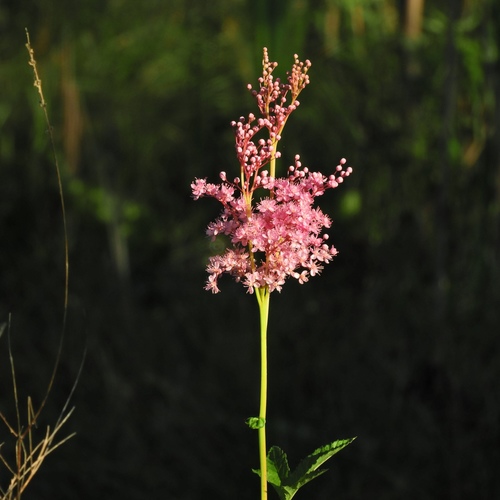


Queen Of The Prairie
filipendula rubra
Queen of the Prairie (Filipendula rubra) is an exceptionally beautiful, tall perennial wildflower native to the wet meadows and fens of eastern and central North America. Renowned for its dramatic, feathery plumes of fragrant pink flowers that bloom in mid-summer, this member of the rose family (Rosaceae) adds an air of elegance to any wetland ecosystem. It is a highly valued species for native restoration projects and rain gardens, where it thrives in constantly moist, organic soils. Beyond its ornamental appeal, the Queen of the Prairie plays a critical role in supporting local biodiversity, serving as a vital pollen source for countless native bees, beetles, and butterflies. Although it has a limited and patchy natural distribution in the wild, this striking plant is a favorite among conservationists and native plant enthusiasts who appreciate its statuesque presence and ecological value.
生息地: Typically found in wet meadows, fens, swamps, and moist prairies with rich, organic soil.
Queen of the Prairie is a tall, erect perennial that stands out due to its spectacular, billowy clusters of tiny, peach-pink to deep pink flowers, which resemble puffs of cotton candy. Its leaves are large, bright green, and deeply divided into seven to nine hand-like lobes, with the terminal lobe being significantly larger and more prominent. The stems are smooth and often display a reddish-brown tinge, rising high above surrounding meadow grasses to hold its elegant flower panicles aloft, typically reaching heights of up to 2.5 meters.
カテゴリ
植物レア度
Common
危険度
1/5 · 非常に低い
スナップ
最初にスナップしよう!
Despite its common name, the plant is not a grass, but a member of the Rose family (Rosaceae).
The roots have been historically used in traditional Native American medicine to treat conditions such as heart trouble and joint pain.
Unlike many flowers, the blossoms of Queen of the Prairie do not produce nectar; they rely solely on pollen to attract insects.
It utilizes creeping underground rhizomes to form large, dense colonial clumps, which helps stabilize wet soils and exclude weeds.
The massive, fragrant flower plumes emit chemical signals that draw in large numbers of diverse native bees and beetles.
Its specialized root tissues are adapted to oxygen-depleted, waterlogged conditions, preventing root rot in swampy terrains.
As a photoautotrophic plant, Queen of the Prairie produces its own energy using sunlight, carbon dioxide, and water through the process of photosynthesis.
Bombus pensylvanicus
The American Bumblebee feeds on the abundant pollen produced by the flowers and serves as a major pollinator.
Odocoileus virginianus
White-tailed Deer occasionally browse the lush foliage and young stems of the plant.
Phragmatobia fuliginosa
The larvae of the Ruby Tiger Moth feed on the leaves of this species.
このオブジェクトにはまだ特徴バッジが割り当てられていません。
まだ別名はありません。
テーマが追加されると、このオブジェクトのコレクションがここに表示されます。
危険度
1/5 · 非常に低い
まだ特別な安全上の注意はありません。
Queen Of The Prairieを識別する最も簡単な方法は、Snappit自然識別アプリを使用することです。
120-250 cm
5-20 年
As a photoautotrophic plant, Queen of the Prairie produces its own energy using sunlight, carbon dioxide, and water through the process of photosynthesis.
Typically found in wet meadows, fens, swamps, and moist prairies with rich, organic soil.
ズームインしてクラスターを分割し、このオブジェクトが撮影された場所を探索しましょう。
新しい観察が追加されると、ここに最近のスナップが表示されます。



.JPG)
















