

Rare Skipper
problema bulenta
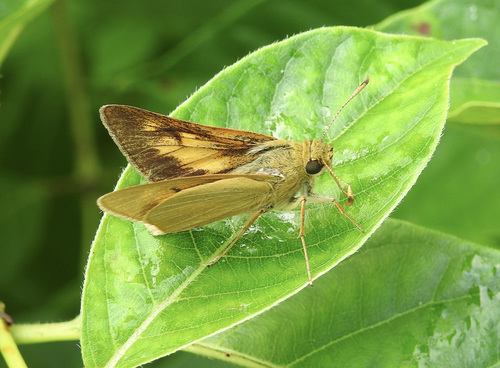
The Rare Skipper, Problema bulenta, is a fascinating but elusive butterfly species, aptly named for its scarcity across its limited geographic range. As a member of the skipper family (Hesperiidae), it possesses a unique combination of moth-like stout bodies and butterfly-like clubbed antennae, often with a distinctive hook at the tip. This species is an important indicator of healthy prairie and savanna ecosystems, particularly those rich in its larval host plant, Eastern Gamagrass. Its survival is intrinsically linked to the conservation of these increasingly threatened habitats, making every sighting a significant event for naturalists and conservationists alike.
生息地: Found in moist prairies, savannas, open woodlands, and disturbed grassy areas, particularly where its host plant, Eastern Gamagrass, is abundant, often near wetlands or rivers.
The Rare Skipper typically measures 3 to 4 cm in wingspan, showcasing a robust body and relatively small wings. Males feature a vibrant orange-brown upperside with broad, dark borders and a distinct, elongated stigma (a scent patch) on the forewing. Females are generally darker brown, with more diffuse orange markings and a less prominent stigma. Both sexes exhibit a rapid, darting flight pattern characteristic of skippers, often making them a challenge to observe in detail. Their undersides are usually a duller yellowish-brown, providing camouflage against dried grasses.
カテゴリ
昆虫レア度
Common
危険度
1/5 · 非常に低い
スナップ
最初にスナップしよう!
Male Rare Skippers possess a specialized scent patch on their forewings, called a stigma, which releases pheromones to attract mates.
The Rare Skipper is named for its scarcity and specific habitat needs, making it a prized sighting for butterfly enthusiasts.
The larvae construct shelters by rolling and tying together leaves of their host plant, Eastern Gamagrass, to protect themselves from predators.
Unlike many butterflies, skippers have thick, moth-like bodies and antennae that are clubbed with a distinctive hook at the tip, often giving them a hybrid appearance.
Rare Skippers exhibit a very fast, erratic, and darting flight pattern that makes them difficult to catch or follow, serving as an effective defense against predators.
The larvae of the Rare Skipper are highly specialized, feeding exclusively on the leaves of Eastern Gamagrass, Tripsacum dactyloides, a critical adaptation that ties their survival to this specific plant.
Adult skippers utilize a long, coiled proboscis to efficiently extract nectar from a variety of flowering plants, enabling them to fuel their energetic flight.
Adult Rare Skippers feed on nectar from various flowering plants, while their larvae are strict herbivores, consuming the leaves of a single host plant species.
年齢による違い: Larvae feed exclusively on Eastern Gamagrass leaves, while adults subsist solely on flower nectar.
Tripsacum dactyloides
The exclusive host plant for the Rare Skipper larvae, providing essential nutrition for their development.
Asclepias tuberosa
Adult Rare Skippers feed on nectar from this plant, also aiding in its pollination.
Thryothorus ludovicianus
A common bird species that may prey on adult or larval skippers in their habitat.
このオブジェクトにはまだ特徴バッジが割り当てられていません。
まだ別名はありません。
テーマが追加されると、このオブジェクトのコレクションがここに表示されます。
危険度
1/5 · 非常に低い
まだ特別な安全上の注意はありません。
Rare Skipperを識別する最も簡単な方法は、Snappit自然識別アプリを使用することです。
2-3 cm
3-4 cm
0.001-0.005 kg
最大 1 年
20 km/h
Adult Rare Skippers feed on nectar from various flowering plants, while their larvae are strict herbivores, consuming the leaves of a single host plant species.
Found in moist prairies, savannas, open woodlands, and disturbed grassy areas, particularly where its host plant, Eastern Gamagrass, is abundant, often near wetlands or rivers.
ズームインしてクラスターを分割し、このオブジェクトが撮影された場所を探索しましょう。
新しい観察が追加されると、ここに最近のスナップが表示されます。









.jpg&width=800)