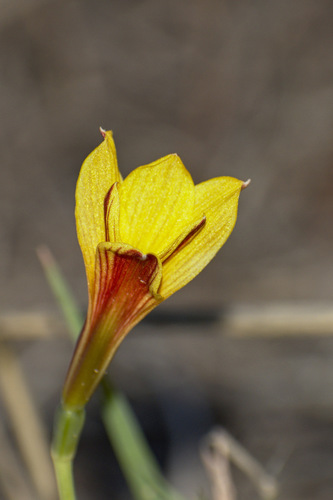


Rio Grande Copper Lily
zephyranthes tubispatha
The Rio Grande Copper Lily (Zephyranthes tubispatha) is a fascinating and beautiful bulbous perennial belonging to the amaryllis family. Often referred to generally as a rain lily, this diminutive plant has mastered the art of timing, spending much of the year entirely dormant beneath the soil as a small bulb. It waits patiently for the heavy, soaking rains of late summer and early fall. Once the dry earth is drenched, the plant springs to life, sending up delicate, striking blooms seemingly overnight. These fleeting flowers add sudden, vivid splashes of color to otherwise unremarkable pastures, grasslands, and roadsides across the southern United States, the Caribbean, and parts of South America. Because they only bloom for a short window following storms, encountering a field dotted with Rio Grande Copper Lilies is a delightful and ephemeral reward for nature lovers and botanists alike.
生息地: Found primarily in open, sun-drenched habitats such as grasslands, pastures, and disturbed roadsides, thriving in well-draining soils that experience periodic heavy rainfall.
This species produces a single, solitary flower on a slender, leafless stalk that typically reaches 10 to 25 centimeters in height. The funnel-shaped blossom is highly distinctive, featuring petals that are deeply colored with a coppery-orange to reddish-brown hue on the outside, while the interior reveals a contrasting, bright golden-yellow. The plant's leaves, when present, are narrow, grass-like, and green, often emerging either just before or alongside the striking flowers.
カテゴリ
植物レア度
Common
危険度
1/5 · 非常に低い
スナップ
最初にスナップしよう!
The Rio Grande Copper Lily is famously known as a rain lily because its blooms magically appear as if out of nowhere just days after a heavy downpour.
The genus name Zephyranthes translates to flower of the west wind, referring to Zephyrus, the Greek god of the west wind who brings light spring and summer rains.
To deter herbivores, the bulbs of this plant contain toxic phenanthridine alkaloids, a chemical defense common in the amaryllis family.
The plant remains dormant during dry spells and rapidly produces flowers two to three days after a heavy rainstorm.
It utilizes an underground bulb to store water and nutrients, allowing it to survive extreme heat and prolonged drought.
The flowers open wide in bright sunlight and close up during the night or on heavily overcast days to protect their pollen.
Like most plants, the Rio Grande Copper Lily creates its own food through photosynthesis using sunlight, water, and atmospheric carbon dioxide.
Apis mellifera
Pollinates the flowers while foraging for nectar
Phoebis sennae
Visits the blooms for nectar, assisting in pollination
Sus scrofa
May dig up and consume the bulbs despite their toxicity
このオブジェクトにはまだ特徴バッジが割り当てられていません。
まだ別名はありません。
テーマが追加されると、このオブジェクトのコレクションがここに表示されます。
危険度
1/5 · 非常に低い
まだ特別な安全上の注意はありません。
Rio Grande Copper Lilyを識別する最も簡単な方法は、Snappit自然識別アプリを使用することです。
10-25 cm
3-15 年
Like most plants, the Rio Grande Copper Lily creates its own food through photosynthesis using sunlight, water, and atmospheric carbon dioxide.
Found primarily in open, sun-drenched habitats such as grasslands, pastures, and disturbed roadsides, thriving in well-draining soils that experience periodic heavy rainfall.
ズームインしてクラスターを分割し、このオブジェクトが撮影された場所を探索しましょう。
新しい観察が追加されると、ここに最近のスナップが表示されます。

Louisiana, US
ここで見られるかも ナンテン, Rio Grande Copper Lily と ボールモス.
ガイドを見る →

Louisiana, US
ここで見られるかも ナンテン, Rio Grande Copper Lily と ボールモス.
ガイドを見る →

Louisiana, US
ここで見られるかも ナンテン, Rio Grande Copper Lily と ボールモス.
ガイドを見る →








.jpg&width=800)

