

Silky Phacelia
phacelia sericea
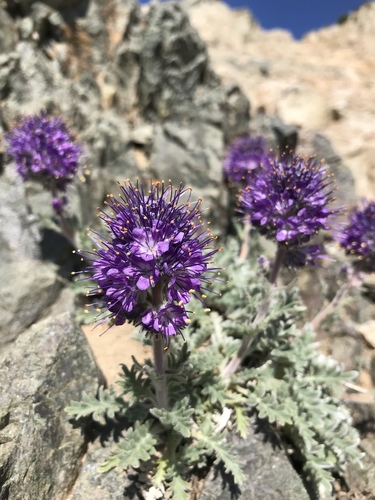
The Silky Phacelia (Phacelia sericea) is a striking perennial wildflower celebrated for its vibrant purple blooms and distinctive silvery-hairy foliage. Thriving in the harsh, exposed environments of high-altitude mountain ranges, this plant showcases remarkable resilience and beauty. Its dense, brush-like flower clusters create a vivid display against the rocky backdrop of its alpine habitat, attracting a variety of pollinators. It's a fascinating example of adaptation to extreme conditions, making it a beloved sight for hikers and botanists alike in the mountainous regions of western North America.
生息地: Found in subalpine and alpine environments, typically on rocky slopes, talus, scree, and open ridges with well-drained soil.
The Silky Phacelia is characterized by its densely hairy, silvery-green leaves, which are typically deeply lobed or dissected, forming a basal rosette or appearing along its erect stems. Its most prominent feature is the upright, dense, cylindrical to conical flower clusters, often described as brush-like. These clusters are composed of numerous small, bell-shaped flowers ranging in color from deep purple to lavender-blue, often with contrasting yellow or cream stamens that protrude beyond the petals, giving the inflorescence a fuzzy appearance. The plant typically grows 10 to 40 centimeters tall.
カテゴリ
植物レア度
Common
危険度
1/5 · 非常に低い
スナップ
最初にスナップしよう!
It plays a crucial role in alpine ecosystems by providing an early and consistent nectar source for high-altitude insect pollinators.
Its dense hairs give the plant a silky, almost fuzzy appearance, which helps it survive in harsh, windy alpine conditions.
Silky Phacelia is a perennial, meaning it lives for multiple years, which is an advantageous trait in environments with very short growing seasons.
The genus name 'Phacelia' comes from the Greek word 'phakelos' meaning 'bundle,' referring to the clustered flowers.
Silky Phacelia is highly adapted to freezing temperatures and short growing seasons, allowing it to flourish in high-altitude environments where few other plants can survive. Its perennial nature helps it persist through harsh winters.
The plant's distinctive silvery, dense hairs (sericeous pubescence) provide insulation against cold, reduce water loss in dry, windy conditions, and protect it from intense UV radiation at high elevations. This adaptation is crucial for its survival.
Its vibrant, showy purple flower clusters and abundant nectar production make it highly attractive to a wide array of high-altitude pollinators, including various species of bees and butterflies, facilitating successful reproduction in often-isolated habitats.
As an autotrophic plant, Silky Phacelia produces its own food through photosynthesis, converting sunlight, water, and carbon dioxide into sugars. It absorbs essential mineral nutrients from the soil through its root system.
Bombus alpinus
Pollinator for its vibrant flowers.
Marmota caligata
Primary herbivore feeding on leaves and stems.
Glomeromycota species
Helps improve nutrient uptake for the plant.
Eritrichium nanum
Competes for light and soil resources.
このオブジェクトにはまだ特徴バッジが割り当てられていません。
まだ別名はありません。
テーマが追加されると、このオブジェクトのコレクションがここに表示されます。
危険度
1/5 · 非常に低い
まだ特別な安全上の注意はありません。
Silky Phaceliaを識別する最も簡単な方法は、Snappit自然識別アプリを使用することです。
10-40 cm
0.01-0.1 kg
3-10 年
As an autotrophic plant, Silky Phacelia produces its own food through photosynthesis, converting sunlight, water, and carbon dioxide into sugars. It absorbs essential mineral nutrients from the soil through its root system.
Found in subalpine and alpine environments, typically on rocky slopes, talus, scree, and open ridges with well-drained soil.
Photosynthesis And Nutrient Absorption
100-1000
ズームインしてクラスターを分割し、このオブジェクトが撮影された場所を探索しましょう。
新しい観察が追加されると、ここに最近のスナップが表示されます。














.jpg&width=800)



