

Small-Flower Lousewort
pedicularis parviflora
The Small-Flower Lousewort is a charming yet unassuming wildflower native to the pristine, soggy landscapes of the far north. Standing as a delicate inhabitant of peat bogs, fens, and subarctic muskegs, this plant is notable for its hemiparasitic lifestyle. While it possesses green leaves and is fully capable of photosynthesis, it supplements its diet by tapping into the vascular systems of neighboring sedges and grasses. This unique survival strategy allows it to thrive in nutrient-poor, waterlogged soils where other plants might struggle. Historically overlooked due to its modest size and remote habitats, this species plays a vital role in wetland ecology. By selectively siphoning resources from dominant surrounding vegetation, it prevents any single species from monopolizing the area, thereby promoting a richer diversity of local plant life. For wilderness hikers and botany enthusiasts exploring northern mires, finding these petite purplish-pink spikes is a delightful reward.
生息地: Typically found in saturated, organic soils of subarctic fens, peat bogs, and damp coniferous forest edges.
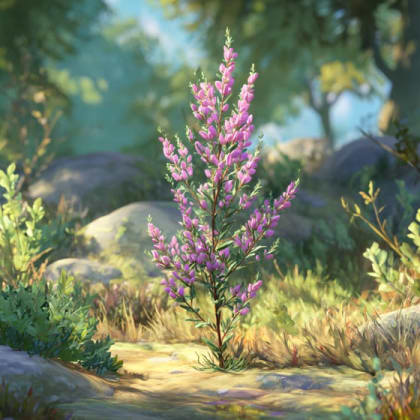
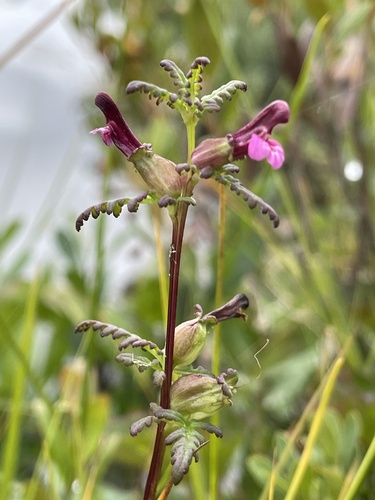
This herbaceous plant typically reaches heights of 10 to 45 centimeters, featuring upright, often purplish-tinted stems. Its leaves are deeply divided and fern-like, arranged alternately along the stem. The inflorescence is a terminal spike of small, bilabiate (two-lipped) flowers that range in color from pale pink to deep purplish-red. The upper lip of the tubular corolla is arched and hood-like, while the lower lip is three-lobed, creating a specialized structure designed specifically to welcome heavy pollinators like bumblebees.
カテゴリ
植物レア度
Common
危険度
1/5 · 非常に低い
スナップ
最初にスナップしよう!
Despite their parasitic nature, louseworts act as ecosystem engineers by weakening dominant plants, which prevents them from crowding out rare mosses and wildflowers.
Its tiny seeds are specially adapted to float, helping them disperse across waterlogged wetlands during spring snowmelts.
The common name 'lousewort' comes from an ancient, incorrect European belief that livestock eating these plants would contract lice.
Uses specialized root structures called haustoria to penetrate and steal water and nutrients from host plants.
Thrives in freezing subarctic environments by producing anti-freeze-like compounds and maintaining compact, low-growing structures.
Features distinctive bilabiate flowers that act as landing pads, guiding specific heavy-bodied pollinators directly to nectar reserves.
Synthesizes carbohydrates via photosynthesis while extracting water and essential mineral nutrients directly from the roots of nearby host plants.
年齢による違い: Begins life relying entirely on seed reserves and basic photosynthesis before forming parasitic root connections with nearby plants.
Carex aquatilis
The small-flower lousewort parasitizes water sedge roots to extract water and essential nutrients.
Bombus polaris
Arctic bumblebees are primary pollinators, physically forcing open the flowers to retrieve nectar.
Salix arctica
It sometimes parasitizes arctic willow roots to survive in ultra-oligotrophic subarctic soils.
このオブジェクトにはまだ特徴バッジが割り当てられていません。
まだ別名はありません。
テーマが追加されると、このオブジェクトのコレクションがここに表示されます。
危険度
1/5 · 非常に低い
まだ特別な安全上の注意はありません。
Small-Flower Lousewortを識別する最も簡単な方法は、Snappit自然識別アプリを使用することです。
10-45 cm
0.01-0.05 kg
1-2 年
Synthesizes carbohydrates via photosynthesis while extracting water and essential mineral nutrients directly from the roots of nearby host plants.
Typically found in saturated, organic soils of subarctic fens, peat bogs, and damp coniferous forest edges.
Root Grafting
ズームインしてクラスターを分割し、このオブジェクトが撮影された場所を探索しましょう。
新しい観察が追加されると、ここに最近のスナップが表示されます。