

Small-Flower Pawpaw
asimina parviflora
The Small-Flower Pawpaw (Asimina parviflora) is a charming, deciduous understory shrub native to the pine forests and dry oak woodlands of the southeastern United States. Unlike its larger relative, the common pawpaw, this species grows as a multi-stemmed dwarf shrub, typically reaching heights of just one to three meters. It is highly valued for its ecological role, acting as an essential host plant for the spectacular zebra swallowtail butterfly and providing seasonal nourishment to various woodland creatures with its small, sweet, fleshy fruits. In early spring, before its leaves fully unfold, the plant produces intriguing dark purple to maroon flowers that emit a faint, yeasty odor to attract carrion-loving insect pollinators.
生息地: Found in dry to moist sandy pine flatwoods, oak-hickory understories, and coastal plain forests of the southeastern United States.
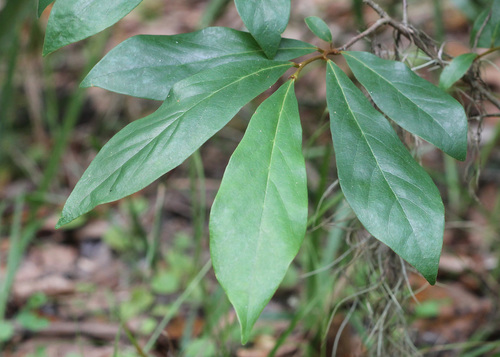
This slender, multi-stemmed shrub features dark green, obovate leaves that are smooth on top and covered in rusty, pubescent hairs underneath when young. In spring, it produces small, inconspicuous, three-petaled flowers that transition from greenish-yellow to deep maroon, measuring only 1 to 2 centimeters across. The resulting fruits are oblong, greenish-yellow berries, roughly 3 to 7 centimeters long, which grow in small clusters and turn dark brown or blackish when fully ripe in late summer.
カテゴリ
植物レア度
Common
危険度
1/5 · 非常に低い
スナップ
最初にスナップしよう!
Despite belonging to the mostly tropical Annonaceae family, this species is highly cold-hardy and well-adapted to temperate climates.
Its scientific name 'parviflora' translates directly to 'small-flowered' in Latin.
The leaves of the Small-Flower Pawpaw emit a distinct scent reminiscent of green bell peppers or gasoline when crushed.
Flowers produce a faint yeasty odor and dark maroon coloration to trick sap beetles and carrion flies into visiting and pollinating them.
Foliage contains insecticidal compounds called acetogenins, which deter generalist herbivores while protecting specialized caterpillars that eat them.
Thrives in the dense understory of pine and hardwood forests by efficiently capturing filtered sunlight with its broad leaves.
As a photosynthetic plant, it produces its own energy from sunlight, water, and carbon dioxide while absorbing minerals from the soil.
Protographium marcellus
The leaves of this shrub serve as the exclusive larval food source for zebra swallowtail caterpillars.
Didelphis virginiana
Opossums forage on the ground for the fallen, sweet, custard-like fruits of this plant.
Carpophilus lugubris
Attracted by the yeasty aroma of the flowers, these beetles feed on pollen and aid in cross-pollination.
このオブジェクトにはまだ特徴バッジが割り当てられていません。
まだ別名はありません。
テーマが追加されると、このオブジェクトのコレクションがここに表示されます。
危険度
1/5 · 非常に低い
まだ特別な安全上の注意はありません。
Small-Flower Pawpawを識別する最も簡単な方法は、Snappit自然識別アプリを使用することです。
100-300 cm
15-30 年
As a photosynthetic plant, it produces its own energy from sunlight, water, and carbon dioxide while absorbing minerals from the soil.
Found in dry to moist sandy pine flatwoods, oak-hickory understories, and coastal plain forests of the southeastern United States.
Photosynthesis
60-100 日
ズームインしてクラスターを分割し、このオブジェクトが撮影された場所を探索しましょう。
新しい観察が追加されると、ここに最近のスナップが表示されます。