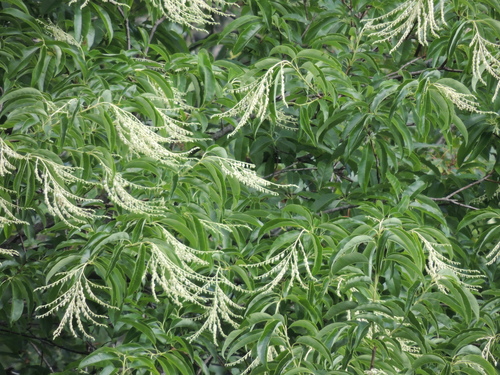


Sourwood
oxydendrum arboreum
Sourwood, also known as the sorrel tree, is a deciduous understory tree native to the eastern United States, particularly renowned in the Appalachian region. Celebrated for its striking late-summer blooms and brilliant autumn foliage, it is a standout species in deciduous forests, where it rarely exceeds moderate heights. It is highly prized by beekeepers, as its delicate white bell-shaped flowers yield an incredibly rich, light-colored honey with a distinctively sharp, sweet flavor. Its sour-tasting leaves, which contain oxalic acid, give the tree both its common and scientific names.
生息地: Found in well-drained, acidic soils of upland deciduous forests, ridges, and slopes, often growing alongside oaks and pines.
Sourwood typically grows 9 to 15 meters tall, featuring a slender trunk and a rounded canopy. Its bark is thick, deeply furrowed, and gray-brown, resembling alligator skin on older specimens. The leaves are oblong, finely serrated, and a glossy green during spring and summer, turning a breathtaking brilliant crimson to purple in early autumn. In mid-to-late summer, the tree produces drooping panicles of small, white, urn-shaped flowers that resemble lilies-of-the-valley, which eventually dry into persistent woody seed capsules.
カテゴリ
植物レア度
Common
危険度
1/5 · 非常に低い
スナップ
最初にスナップしよう!
Mountain hikers sometimes chew on the leaves to alleviate thirst, as the sour taste stimulates saliva production.
Sourwood honey is highly prized and rare because the trees bloom for only a short period in mid-summer, requiring beekeepers to time their hive placements perfectly.
The common name 'Sourwood' and scientific name 'Oxydendrum' (sour wood in Greek) both refer to the acidic, sour taste of the leaves.
The leaves contain oxalic acid, giving them a sour taste that deters many generalist herbivores and insect pests.
Unlike most forest trees, it blooms in mid-to-late summer, avoiding competition for pollinators and providing a vital late-season nectar source.
Rapidly produces anthocyanin pigments in autumn, protecting its leaves from light damage as it resorbs nutrients before shedding.
As a photosynthetic plant, sourwood produces its own energy using sunlight, carbon dioxide, water, and essential nutrients absorbed from acidic soil.
Apis mellifera
Bees pollinate the flowers while harvesting nectar to produce famous sourwood honey.
Hyalophora cecropia
The caterpillars of this giant silk moth feed on the leaves of the sourwood.
Odocoileus virginianus
Deer browse on the twigs and leaves of sourwood, especially during the winter.
このオブジェクトにはまだ特徴バッジが割り当てられていません。
まだ別名はありません。
テーマが追加されると、このオブジェクトのコレクションがここに表示されます。
危険度
1/5 · 非常に低い
まだ特別な安全上の注意はありません。
Sourwoodを識別する最も簡単な方法は、Snappit自然識別アプリを使用することです。
900-1800 cm
100-200 年
As a photosynthetic plant, sourwood produces its own energy using sunlight, carbon dioxide, water, and essential nutrients absorbed from acidic soil.
Found in well-drained, acidic soils of upland deciduous forests, ridges, and slopes, often growing alongside oaks and pines.
Photosynthesis
ズームインしてクラスターを分割し、このオブジェクトが撮影された場所を探索しましょう。
新しい観察が追加されると、ここに最近のスナップが表示されます。