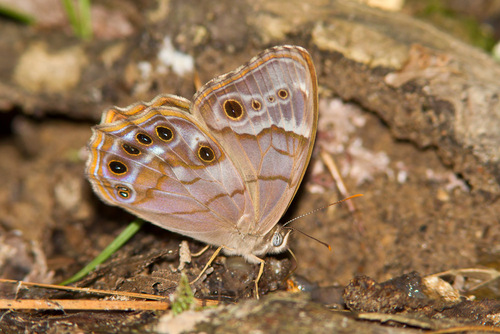


Southern Pearly-Eye
lethe portlandia
The Southern Pearly-Eye (Lethe portlandia) is an elegant, shade-loving butterfly native to the damp forests and river swamps of the southeastern United States. Renowned for its delicate behavior, this insect avoids bright, open fields, preferring instead the dappled sun-flecks of dense woodland understories and cane brakes. It is an captivating species for nature enthusiasts due to its unusual preference for tree sap, rotting fruit, and mud over typical floral nectar.
生息地: Typically found in damp, heavily shaded deciduous woodlands, swampy river valleys, and cane brakes near waterways.
This medium-sized butterfly has a wingspan ranging from 5 to 7 centimeters. Its wings feature a warm, muted brown background, decorated with a stunning row of dark, circular eyespots on both the upper and lower surfaces. These eyespots are ringed in soft yellow and feature brilliant, pearly-white centers. The outer margins of its wings are elegantly scalloped, with fine dark and white borders that create a beautifully patterned edge.
カテゴリ
昆虫レア度
Common
危険度
1/5 · 非常に低い
スナップ
最初にスナップしよう!
Male Southern Pearly-Eyes are intensely territorial, actively patrolling chosen tree trunks and aggressively chasing off other passing insects.
The larval host plant, giant cane, is the only bamboo species that is completely native to the continental United States.
Unlike most other butterfly species, the Southern Pearly-Eye completely shuns flower nectar, preferring to feed on animal dung and decomposing tree sap.
It is highly adapted to flying in deeply shaded forest understories and is active during twilight when other butterfly species seek shelter.
The striking, pearly-centered eyespots on the edges of its wings successfully misdirect avian predators away from its vital body parts.
When resting vertically with closed wings against tree bark, its mottled brown patterns blend seamlessly into the woodland background.
Unlike most nectar-feeding butterflies, this species primarily drinks tree sap, fermented fruit, and moisture from damp soil.
年齢による違い: Larvae feed strictly on the leaves of native giant cane, whereas the adults transition to feeding on liquid organic fluids.
Arundinaria gigantea
The caterpillar of this butterfly relies entirely on giant cane foliage as its source of food.
Quercus alba
Adult butterflies feed frequently on leaking sugary fluids found on the trunk bark of oak trees.
Sayornis phoebe
Insectivorous woodland birds often hunt these butterflies along forest borders.
このオブジェクトにはまだ特徴バッジが割り当てられていません。
まだ別名はありません。
テーマが追加されると、このオブジェクトのコレクションがここに表示されます。
危険度
1/5 · 非常に低い
まだ特別な安全上の注意はありません。
Southern Pearly-Eyeを識別する最も簡単な方法は、Snappit自然識別アプリを使用することです。
0.0001+ kg
12 km/h
Unlike most nectar-feeding butterflies, this species primarily drinks tree sap, fermented fruit, and moisture from damp soil.
Typically found in damp, heavily shaded deciduous woodlands, swampy river valleys, and cane brakes near waterways.
Foraging
ズームインしてクラスターを分割し、このオブジェクトが撮影された場所を探索しましょう。
新しい観察が追加されると、ここに最近のスナップが表示されます。









.jpg&width=800)






