Squirrel Corn
dicentra canadensis
Squirrel Corn (Dicentra canadensis) is an enchanting perennial wildflower native to the rich, deciduous forests of eastern North America. Emerging early in the spring, this delicate 'spring ephemeral' completes its entire above-ground life cycle before the forest canopy closes and blocks out the sunlight. It gets its whimsical common name from its underground tubers, which closely resemble bright yellow kernels of corn. These tubers act as vital nutrient reservoirs, allowing the plant to survive dormant underground through the harsh winter months. Historically cherished by nature enthusiasts for its unique, heart-shaped blossoms and finely dissected foliage, Squirrel Corn forms lush, green carpets across damp forest floors. While it is closely related to Dutchman's Breeches, it stands out with its subtly fragrant, heart-shaped flowers and more rounded lobes. Finding a patch of Squirrel Corn is a true sign that spring has arrived, bringing a burst of life to the forest floor when most other plants are just waking up.
生息地: Found in rich, moist deciduous woods, typically in alkaline soil atop limestone slopes or deep forest hollows.
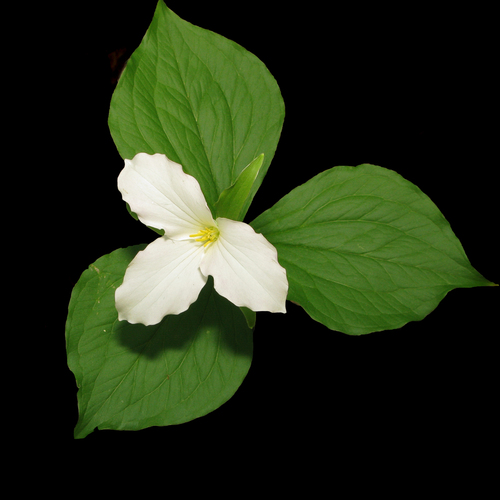
This herbaceous perennial typically grows 15 to 30 centimeters tall, featuring deeply divided, grayish-green, fern-like leaves that form a soft, low-lying mound. Suspended from a slender, arching stalk are several nodding, heart-shaped flowers. Each blossom is creamy white with a faint pinkish or purplish tint, measuring about 2 centimeters in length. The inner petals are fused to form a small, yellow-tipped beak at the tip. Beneath the soil lie the characteristic yellow, spherical tubers that resemble small kernels of field corn, measuring about 0.5 to 1 centimeter in diameter.
カテゴリ
植物レア度
Common
危険度
1/5 · 非常に低い
スナップ
最初にスナップしよう!
Because it is a spring ephemeral, the entire above-ground portion of the plant completely dies back and disappears by mid-summer, leaving no trace above the soil.
Despite its name, the tubers of Squirrel Corn contain toxic alkaloids like bicuculline, which can be harmful to livestock if eaten in large quantities.
Its scientific name, Dicentra, comes from Greek words meaning 'two-spurred,' referring to the shape of the petals.
The bright yellow, corn-like tubers beneath the soil are actually modified underground stems called corms.
Completes its entire photosynthetic and reproductive cycle in early spring before the forest canopy leafs out, maximizing its sunlight capture.
Relies on bright yellow, starch-rich corms or tubers to store energy underground, allowing the plant to survive dormancy and winter cold.
Uses fleshy appendages called elaiosomes on its seeds to attract ants, which carry the seeds back to their nests to feed on the nutrient-rich structures and effectively plant them.
As a photosynthetic plant, Squirrel Corn produces its own energy using sunlight, water, carbon dioxide, and essential soil nutrients.
Bombus vagans
Pollinates the flowers using its long tongue to reach deep into the tubular petals.
Aphaenogaster rudis
Disperses the seeds by carrying them to underground nests to consume the nutrient-dense elaiosomes.
Sciurus carolinensis
Occasionally digs up and feeds on the yellow tubers, despite the presence of toxic alkaloids.
このオブジェクトにはまだ特徴バッジが割り当てられていません。
まだ別名はありません。
テーマが追加されると、このオブジェクトのコレクションがここに表示されます。
危険度
1/5 · 非常に低い
まだ特別な安全上の注意はありません。
Squirrel Cornを識別する最も簡単な方法は、Snappit自然識別アプリを使用することです。
15-30 cm
0.01-0.05 kg
5-20 年
As a photosynthetic plant, Squirrel Corn produces its own energy using sunlight, water, carbon dioxide, and essential soil nutrients.
Found in rich, moist deciduous woods, typically in alkaline soil atop limestone slopes or deep forest hollows.
ズームインしてクラスターを分割し、このオブジェクトが撮影された場所を探索しましょう。
新しい観察が追加されると、ここに最近のスナップが表示されます。





_1_(24790682337).jpg&width=800)