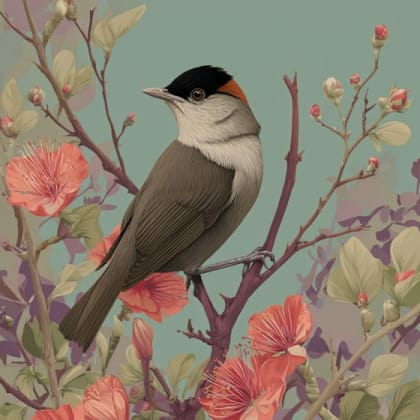
Superb Starling
Lamprotornis superbus
The Superb Starling is a colorful bird with shiny blue and green feathers. They are very social and love to be around other birds, often seen hopping on the ground looking for food.
生息地: Savannas
The Superb Starling has striking iridescent blue-green plumage on its back and head, a bright copper-orange belly, and a stark white band separating the two. Its contrasting black face and tail make it truly stand out from other starlings.
カテゴリ
鳥類レア度
Common
危険度
1/5 · 非常に低い
スナップ
最初にスナップしよう!
Superb Starlings sometimes follow large animals like zebras to snatch up insects they stir up!
Their bright blue feathers aren't just blue; they reflect light like tiny prisms!
These birds often build nests inside tree hollows or abandoned nests of other birds!
These noisy birds love to gather in huge, swirling groups called murmurations at dusk!
Superb Starlings have dazzling iridescent feathers that help them blend into dappled sunlight and signal health to mates.
Superb Starlings can forage and roost in large groups, which helps them find food more efficiently and detect predators sooner.
Superb Starlings can imitate sounds from their environment and other birds, which helps them communicate complex messages.
This colorful bird eats a mix of tasty insects, sweet fruits, and sometimes even nectar!
Acacia tortilis
Nests and roosts in branches
Buteo rufofuscus
Preys on adult starlings

Papio anubis
Raids nests for eggs and chicks
羽毛に覆われている動物(主に鳥類)を指します。
社会性動物は組織的な群れで生活し、採餌、防衛、子育てなど、生存に有利になるよう協力し合います。
さえずったり歌ったりする動物は、つがいの相手を惹きつけたり、縄張りを守ったり、同種間でコミュニケーションをとるために、複雑な声を出します。
カラフルとは、生物や物体が明るくはっきりとした多様な色合いを見せることを指します。

この特性は、主に昆虫やその他の小型無脊椎動物を食べる生物を示します。
この生息地の特徴は、サバンナに自生する種を示します。サバンナは樹木が点在する草原で、通常、雨季と乾季がはっきりしている熱帯または亜熱帯地域に見られます。

昼行性の動物は主に日中に活動し、通常は夜間に休息や睡眠をとります。
まだ別名はありません。
危険度
1/5 · 非常に低い
Enjoy watching birds from a distance and don't try to touch them.
18-19 cm
30-35 cm
0.052-0.069 kg
5-15 年
50 km/h
This colorful bird eats a mix of tasty insects, sweet fruits, and sometimes even nectar!
Savannas
Foraging
ズームインしてクラスターを分割し、このオブジェクトが撮影された場所を探索しましょう。
新しい観察が追加されると、ここに最近のスナップが表示されます。




.jpg&width=800)