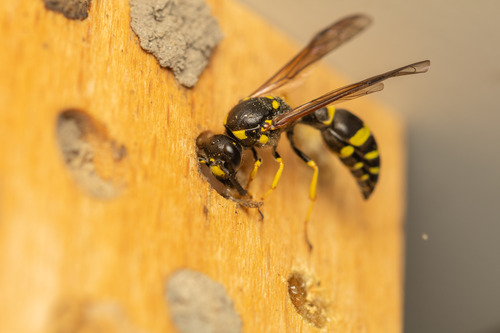


Symmorphus
symmorphus
The genus Symmorphus represents a fascinating group of solitary mason wasps within the family Vespidae. Rather than building large, communal paper nests like their social yellowjacket cousins, these industrious insects are solitary architects. Females seek out pre-existing tubular cavities, such as hollow plant stems or abandoned beetle galleries in dead wood, to craft individual nursery cells partitioned with meticulously gathered mud. Symmorphus wasps are highly beneficial to ecosystems and gardeners alike, as they are expert hunters of leaf-beetle and weevil larvae, helping keep pest populations in check. Watching a female Symmorphus diligently ferry mud and paralyzed prey back to her hidden nest offers a captivating glimpse into the hidden, complex lives of solitary wasps.
生息地: Found in open woodlands, meadows, and gardens, often frequenting areas with flowering umbellifers, dead wood, and hollow-stemmed plants.
Symmorphus wasps are slender, small-to-medium-sized insects, typically measuring between 6 to 12 millimeters in length. They display a stark, warning coloration of deep black with crisp, contrasting yellow or whitish bands across their abdomen and thorax. A distinguishing feature is their narrow waist or petiole, and like other vespids, they fold their dark-tinted wings longitudinally down their backs when resting. Viewed closely, they possess distinct longitudinal grooves on their midsection and have a noticeably more elongated, delicate body shape compared to chunkier social wasps.
カテゴリ
昆虫レア度
Common
危険度
1/5 · 非常に低い
スナップ
最初にスナップしよう!
A mother Symmorphus wasp behaves like a natural pest-controller, sometimes packing up to a dozen paralyzed beetle grubs into a single cell to ensure her baby has enough food.
The name 'mason wasp' comes from the female's habit of using mud to build secure walls between each egg chamber inside a hollow stem.
They will readily use artificial 'bee hotels' in backyard gardens, quickly moving into the small drilled holes intended for solitary bees.
Unlike social hornets or yellowjackets, Symmorphus wasps are solitary and do not have a colony to defend, making them extremely docile and unlikely to sting humans.
Females collect water and soil to mix mud, building sturdy partitions between individual brood cells inside hollow stems or beetle borings.
They possess a specialized sting that delivers a non-lethal, paralyzing venom to beetle larvae, keeping the prey fresh for their carnivorous offspring.
When at rest, they fold their forewings longitudinally in half, an anatomical quirk characteristic of the Vespidae family that protects the wings from damage in tight spaces.
Adults primarily feed on floral nectar for energy, but they actively hunt and paralyze beetle larvae to provision their offspring.
年齢による違い: Larvae are strictly carnivorous, feeding on paralyzed prey provided by the mother, whereas adults feed primarily on nectar.
Daucus carota
Adults feed on the nectar of wild carrot, aiding in incidental pollination.
Chrysomela populi
Females hunt leaf beetle larvae to feed their growing offspring.
Chrysis ignita
Ruby-tailed wasps often parasitize Symmorphus nests, laying eggs inside the provisioned cells to steal the food.
このオブジェクトにはまだ特徴バッジが割り当てられていません。
まだ別名はありません。
テーマが追加されると、このオブジェクトのコレクションがここに表示されます。
危険度
1/5 · 非常に低い
まだ特別な安全上の注意はありません。
Symmorphusを識別する最も簡単な方法は、Snappit自然識別アプリを使用することです。
0-1 cm
1-2 cm
0.00001-0.00005 kg
1 年
20 km/h
Adults primarily feed on floral nectar for energy, but they actively hunt and paralyze beetle larvae to provision their offspring.
Found in open woodlands, meadows, and gardens, often frequenting areas with flowering umbellifers, dead wood, and hollow-stemmed plants.
ズームインしてクラスターを分割し、このオブジェクトが撮影された場所を探索しましょう。
新しい観察が追加されると、ここに最近のスナップが表示されます。




.jpg)














