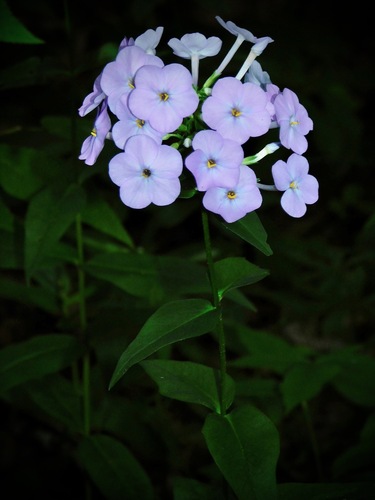


Thickleaf Phlox
phlox carolina
The Thickleaf Phlox (Phlox carolina) is an elegant, clump-forming herbaceous perennial native to the southeastern United States. Renowned for its vibrant clusters of pink, lavender, or occasionally white tubular flowers, this wild beauty illuminates open woodlands, meadows, and roadsides from late spring through summer. It is a highly resilient species, beloved by native plant enthusiasts and gardeners alike for its reliable blooming cycle and attractive foliage. Unlike many of its relatives, the Thickleaf Phlox is particularly celebrated for its tough nature. It serves as a vital ecological anchor in its native habitats, providing critical nectar resources for a wide array of pollinators, especially butterflies and long-tongued bees, while adding brilliant splashes of color to the landscape.
生息地: Typically found in open sunny woodlands, savannas, meadows, glades, and along grassy roadsides in sandy or clay soils.
Thickleaf Phlox is easily recognized by its upright, stout stems that grow 40 to 120 cm tall, often marked with reddish spots or streaks. It features opposite, lance-shaped to elliptic leaves that are notably thick, leathery, and glossy green. The showy, trumpet-shaped flowers are about 1.5 to 2 cm wide, boasting five distinct flat lobes. These blooms are densely packed in rounded terminal clusters (cymes) that create a dome-like floral display in shades of rosy-pink, purple-magenta, or occasionally pure white.
カテゴリ
植物レア度
Common
危険度
1/5 · 非常に低い
スナップ
最初にスナップしよう!
Gardeners highly prize this species because its thick leaves make it far more resistant to powdery mildew than other garden varieties.
The genus name 'Phlox' is derived from the Greek word for 'flame', which was given due to the intensely bright colors of its wild blooms.
The seeds of the Thickleaf Phlox are housed in small capsules that explosively burst open when ripe, flinging seeds away from the parent plant.
Possesses thick, leathery, and highly cutinized leaves that minimize water loss through transpiration, allowing it to withstand dry spells.
Exhibits an evolutionary resistance to powdery mildew, a common fungal disease that frequently ravages other species of the Phlox genus.
Features elongated tubular flowers that shield its nectar, ensuring it is reserved for specialized, long-tongued pollinators like butterflies and hawkmoths.
As an autotrophic plant, Thickleaf Phlox generates its own chemical energy through photosynthesis, converting sunlight, carbon dioxide, and water into sugars.
Papilio glaucus
Visits the flowers for nectar, acting as a primary pollinator.
Odocoileus virginianus
Occasionally browses on the tender leaves and stems of the plant.
このオブジェクトにはまだ特徴バッジが割り当てられていません。
まだ別名はありません。
テーマが追加されると、このオブジェクトのコレクションがここに表示されます。
危険度
1/5 · 非常に低い
まだ特別な安全上の注意はありません。
Thickleaf Phloxを識別する最も簡単な方法は、Snappit自然識別アプリを使用することです。
40-120 cm
3-8 年
As an autotrophic plant, Thickleaf Phlox generates its own chemical energy through photosynthesis, converting sunlight, carbon dioxide, and water into sugars.
Typically found in open sunny woodlands, savannas, meadows, glades, and along grassy roadsides in sandy or clay soils.
ズームインしてクラスターを分割し、このオブジェクトが撮影された場所を探索しましょう。
新しい観察が追加されると、ここに最近のスナップが表示されます。



















